Why Choose Carbon Steel for Commercial Use?The primary driver for choosing Carbon Steel over Aluminum or Stainless Steel is cost-effectiveness combined with rugged strength. In commercial applications where the trailer might face harsh road conditions (common in developing infrastructure projects), carbon steel provides higher tensile strength and is easier to repair in the field if structural damage occurs.
1. The Tank Body: Thickness Matters
The integrity of a pneumatic trailer lies in its tank. Unlike liquid tankers, a dry bulk silo must withstand internal pressure during the discharge process. For a commercial-grade carbon steel cement trailer, you should not compromise on the steel thickness.
- Tank Shell Material: Look for high-strength steel (often labeled as Q345 or T700 in manufacturing specs).
- Standard Thickness: A reliable commercial unit should have a tank body thickness of at least 5mm to 6mm.
- End Plate Thickness: The head or end plates take the most stress; ensure these are reinforced, typically 6mm or thicker.
If the steel is too thin, the tank may deform under the high pressure required for pneumatic discharge, leading to safety hazards and costly replacements.
2. The Pneumatic System: Discharge Efficiency
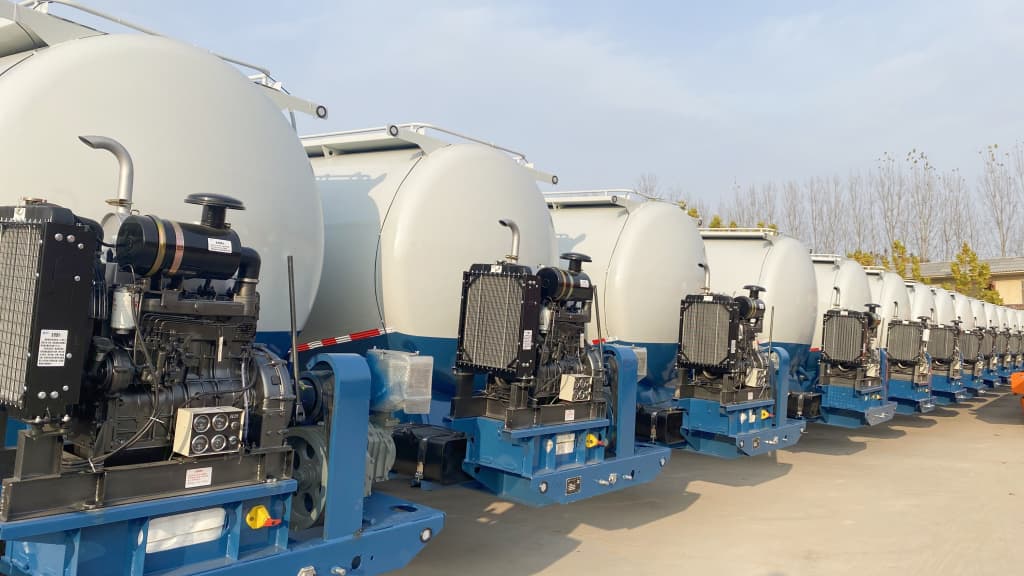
Time is money. In a commercial setting, a trailer that takes too long to unload creates a bottleneck. The efficiency of a Pneumatic Cement Silo Trailer is determined by its air compressor and the design of the fluidized bed.
Performance Benchmarks for Buyers
When reviewing supplier quotes, check these three critical metrics:
- Discharge Speed: It should be greater than 1.5 tons per minute. Anything slower will kill your turnaround times.
- Residual Rate: This is crucial. A good design ensures a residual rate of less than 0.2%. You don't want to carry dead weight back to the depot.
- Air Compressor: Ensure the unit is equipped with a well-known brand (like Weichai or Bohai) usually rated at 12m³ double-cylinder for consistent pressure.
3. V-Shape vs. W-Shape Design
You will often see different belly shapes. For a standard Carbon Steel Dry Bulk Trailer, the design directly impacts stability and unloading.
The V-Shape (Single Belly): Generally used for smaller volumes (under 40cbm). It discharges faster because gravity helps funnel the cement to a single outlet.
The W-Shape (Double/Triple Belly): Essential for larger commercial volumes (50cbm - 80cbm). While it carries more, ensure the internal fluidized bed angle is optimized (usually greater than 45 degrees) to prevent cement from sticking to the corners.
4. Running Gear and Commercial Durability
The tank holds the product, but the running gear handles the road. For commercial export trailers, parts availability is key.
- Axles: Stick to standard 13-ton or 16-ton axles from recognized brands like FUWA or BPW. They are easier to service globally.
- Suspension: For carbon steel trailers, Mechanical Leaf Spring Suspension is the standard recommendation. It is stiffer and handles the heavy, shifting load of dry bulk cement better than air suspension in rough off-road construction sites.
- Tires: Ensure you get 12R22.5 or 315/80R22.5 tires designed for mixed road conditions.
5. Painting and Corrosion Resistance
Since you are buying Carbon Steel, rust is the enemy. Aluminum doesn't rust, but steel does. Therefore, the painting process is not just cosmetic; it is a structural necessity.
Ask the Manufacturer:Do not accept a trailer that has only been spray-painted. Demand Polyurethane paint. It offers high adhesion and strong color retention. More importantly, ask if the trailer undergoes shot blasting before painting. This removes surface impurities and ensures the paint bonds directly to the steel, preventing rust from creeping in under the coating.
6. Key Accessories for Operational Safety
A commercial vehicle must be safe for the operator. Check the spec sheet for these specific items:
- Manhole Covers: Should be cast aluminum or steel, heavy-duty, with a good seal to prevent moisture entry (wet cement is a disaster inside a tanker).
- Safety Valve: A non-negotiable component. It must automatically release pressure if the tank exceeds safe limits.
- Discharge Hose: Look for wear-resistant rubber hoses, typically 4 inches in diameter. Ask for a length that suits your silos (usually 6 meters).
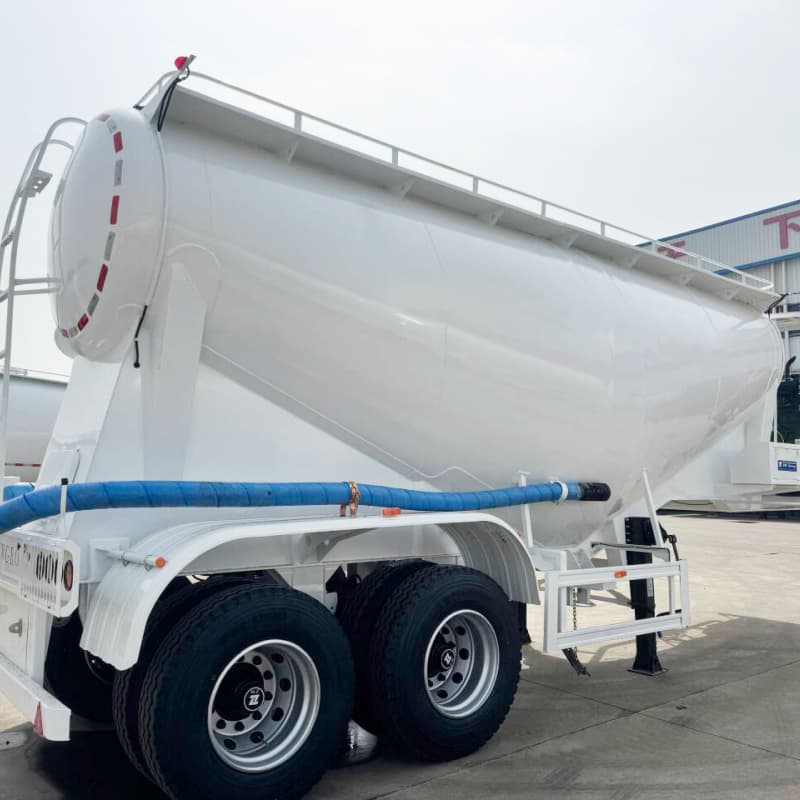 |
Carbon Steel Cement Bulk Tanker Trailer — 24 m³ / 30 t (2 Axles)A robust V-shaped carbon-steel silo trailer ideal for pneumatic cement and powder transport. Factory-ready with automatic submerged-arc welding for durability.
|
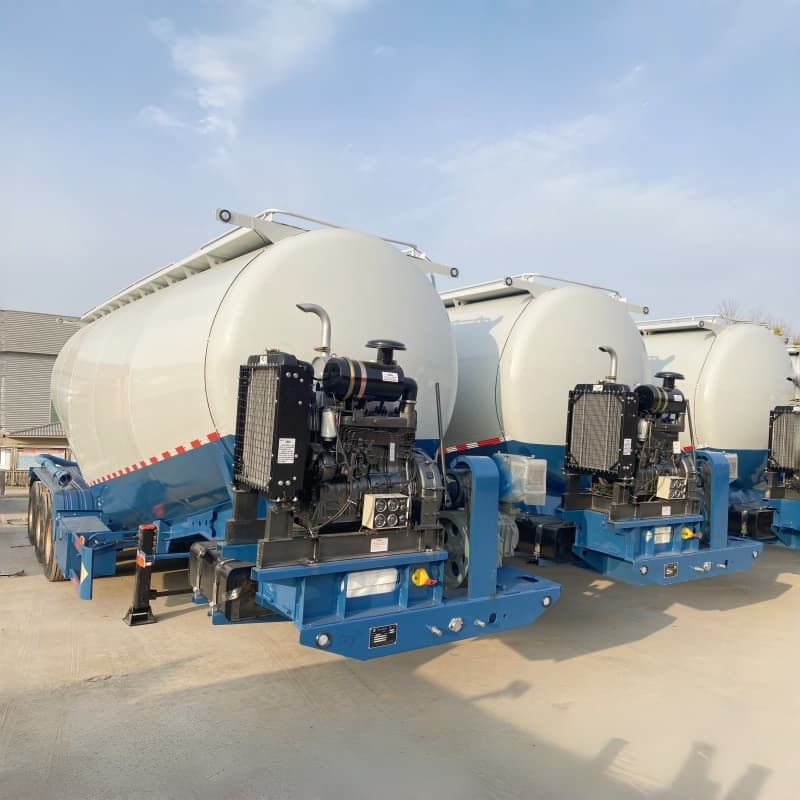 |
Carbon Steel Cement Bulk Tanker Trailer — ~35 m³ / 40 t (3 Axles)High-capacity carbon-steel tanker built for heavy-duty cement transport. Durable V-type tank body with solid chassis and customizable options.
|