Traditional bagged cement transport is rapidly giving way to bulk logistics. Traditional bagging methods incur material losses of 3% to 5% due to moisture, tearing, and manual handling errors. To eliminate these inefficiencies, fleet managers, bulk powder transport contractors, and cement plant logistics operators are transitioning to the cement bulk tanker trailer. Also known as a bulk cement semi trailer or pneumatic powder tanker, this heavy-duty commercial vehicle provides a fully sealed, dust-free environment that preserves material quality from the production silo to the final construction site.

Engineering Architecture of a Pneumatic Cement Tanker
A professional-grade dry bulk powder tanker is engineered to withstand both internal pneumatic pressure and external structural stress. The tank body typically features a V-shaped tank design or a specialized cylindrical geometry optimized for material flow. High-strength steel construction, utilizing Q235 or Q345 carbon steel with a tank material thickness of 3mm to 6mm, ensures structural integrity without adding unnecessary tare weight. Advanced manufacturing techniques allow modern premium configurations to achieve a lightweight design as low as 6.6 tons tare weight, maximizing the legal payload capacity.
Core Structural Components
- Hemispherical End Plates: Spherical tank heads are welded to both ends of the vessel to distribute internal pressure evenly, preventing structural deformation during high-pressure fluidization.
- Fluidized Bed System: Positioned at the base of the V-shaped compartments, the fluidization aeration system uses multi-layered canvas or breathable synthetic materials to introduce compressed air into the powder layer.
- Air Compressor and Discharge Pipe Assembly: Driven by an auxiliary diesel engine or a tractor-head power take-off (PTO) system, the compressor pumps air into the tank, forcing the fluidized cement through an aerodynamic discharge valve network.
- Heavy-Duty Running Gear: A robust 3-axle configuration utilizing premium BPW or FUWA axle brands, paired with heavy-duty mechanical leaf spring suspensions, provides the stability required for rough terrain.
- Premium Coupling Hardware: Highly reliable JOST landing gear and kingpins ensure secure mechanical connection and support when uncoupled from the prime mover.
Operational Parameters and Technical Configurations
Selecting the correct cement transport trailer requires aligning equipment specifications with local axle-load regulations and the specific demands of your logistics routes. For the West African Sahel region, configurations must strike a careful balance between maximum volume capacity and structural durability to handle both paved highways and unpaved laterite roads.
| Parameter | Medium-Capacity Duty | Heavy-Transport Standard | High-Volume Logistics | Max-Capacity Fleet |
|---|---|---|---|---|
| Volume Capacity | 35 m³ | 45 m³ | 60 m³ | 80 m³ |
| Rated Load Capacity | 40 tons | 50 tons | 70 tons | 90-100 tons |
| Overall Dimensions (L×W×H mm) | 10700 × 2500 × 3950 | 11500 × 2550 × 3990 | 12500 × 2550 × 4000 | 13000 × 2550 × 4000 |
| Tare Weight | ~6.8 tons | ~7.2 tons | ~8.5 tons | ~9.8 tons |
| Axle Configuration | 3-Axle FUWA (13T) | 3-Axle FUWA/BPW (13T/16T) | 3-Axle Heavy FUWA (16T) | 3-Axle Reinforced (16T/20T) |
| Unloading Rate | ≥ 1.2 tons/min | ≥ 1.3 tons/min | ≥ 1.5 tons/min | ≥ 1.5 tons/min |
| Residual Rate | < 1% | < 1% | < 0.8% | < 0.8% |
| Recommended Tractor Power | 380HP - 400HP (6x4) | 420HP - 430HP (6x4) | 430HP - 460HP (6x4) | 460HP+ Heavy Duty (6x4) |
| Typical Application Scenario | Urban concrete batching plants; strict axle-load limits | Regional distribution; cross-border transit routes | High-volume mining; large infrastructure projects | Dedicated industrial corridors; large-scale plant transfers |
The Pneumatic Unloading Principle: How It Works
The efficiency of a bulk powder transportation equipment setup relies entirely on its pneumatic unloading system. Understanding this process ensures optimal daily operations and prevents costly material blockages.
Step-by-Step Pneumatic Discharge Process
- Bulk Loading: The trailer is gravity-fed at the cement factory silo through top-mounted manhole covers. Once filled, the dust-proof sealing hatches are mechanically locked.
- Pressurization: Upon reaching the destination silo, the operator connects the discharge pipe assembly to the receiving inlet. The auxiliary diesel engine drives the air compressor, pumping compressed air into the sealed tank.
- Fluidization: As internal pressure climbs to its operational threshold (typically 0.2 MPa or 15-20 psi), the air passes through the bottom fluidization aeration system. This turns the compacted cement powder into a highly fluid, liquid-like state.
- Aerodynamic Discharge: The discharge valve is opened. Driven by the pressure differential between the tank interior and atmospheric pressure, the fluidized cement flows smoothly out of the vehicle.
- Vertical Lift: The system's aerodynamic efficiency allows it to achieve an unloading height of up to 15 meters vertically, pumping cement directly into overhead storage silos at a speed exceeding 1.2 tons per minute, leaving a residual discharge rate of less than 1%.
Strategic Fleet Procurement: Integrating New Tankers with Used Tractors
For transport companies expanding in developing markets like West Africa, optimizing upfront capital allocation is vital. While a brand-new, factory-direct purchase of a 3 axle cement tanker ensures a reliable tank structure with a long 8-15 year equipment life cycle, pairing it with a brand-new prime mover can strain corporate cash flows. This has driven a major market shift toward integrated fleet sourcing solutions.
The Economic Logic of Combined Logistics Solutions
Acquiring a brand-new, high-strength steel cement bulk tanker trailer alongside a premium used truck tractor for cement trailer haulage cuts initial capital expenditures by 40% to 60% compared to buying an entirely new truck-and-trailer combination. A well-maintained, refurbished heavy-duty commercial vehicle (such as a 6x4 configuration tractor head rated at 430HP) delivers the necessary pulling power and fifth wheel coupling stability at a fraction of the cost of a new model.
Real-World Case Study: Fleet Optimization in Burkina Faso
A prominent concrete distribution firm based in the Laongo Plateau-Central region of Burkina Faso faced the challenge of scaling up haulage operations to support regional building projects. The firm needed to transport raw cement from high-capacity manufacturing centers—such as the CIMFAS grinding plant in Ouagadougou, the CIMAF facilities, and the 2,000 tonnes/day capacity CISINOB SA cement plant—directly to inland construction sectors and landlocked markets along the Africa cement corridor.
Instead of purchasing full brand-new rigs, the company executed a strategic procurement strategy: they imported factory-direct 45m³ 3-axle pneumatic cement tankers and paired them with fully reconditioned, used 6x4 tractor heads from top brands like Sinotruk Howo and Shacman. This combined solution delivered immediate business advantages:
- Capital Conservation: The business saved over US$45,000 per operational unit, allowing them to deploy five transport rigs instead of two for the same initial budget.
- Accelerated ROI: Lower debt service requirements allowed the company to achieve full return on investment within the first 14 months of operation.
- Simplified Maintenance: By sourcing widely used tractor brands, the fleet capitalized on the extensive local spare parts availability and mechanical expertise present across the Dangote logistics network and regional transport corridors.
Geographic and Environmental Operational Demands
Operating bulk powder transportation equipment across West Africa, particularly within landlocked Sahel nations like Burkina Faso, requires specialized configurations due to harsh environments. Transport routes often stretch across thousands of kilometers of varied terrain, from modern port terminals in Côte d'Ivoire, Ghana, and Togo to unpaved roads and construction sites deep inland.
Adapting to African Environmental Realities
To operate reliably in these environments, bulk cement semi trailer fleets must be built with specific features:
- Strong Passability for Rough Terrain: Heavy mechanical suspensions with high ground clearance and reinforced multi-leaf springs are essential. Axle placement must distribute weight effectively to prevent bogging down on soft laterite roads during the rainy season.
- Dust-Proof and Moisture Sealing: High humidity at coastal ports followed by intense dust storms in the Sahel can quickly degrade cement powder. Dual-locking, hermetically sealed manhole covers and high-grade silicone gaskets are vital to prevent moisture ingress.
- Corrosion Prevention: Tanker exteriors must undergo a thorough grit-blasting process followed by multi-layered polyurethane anti-corrosion coatings. This protective barrier guards the steel against both coastal salt spray and abrasive desert sands.

|
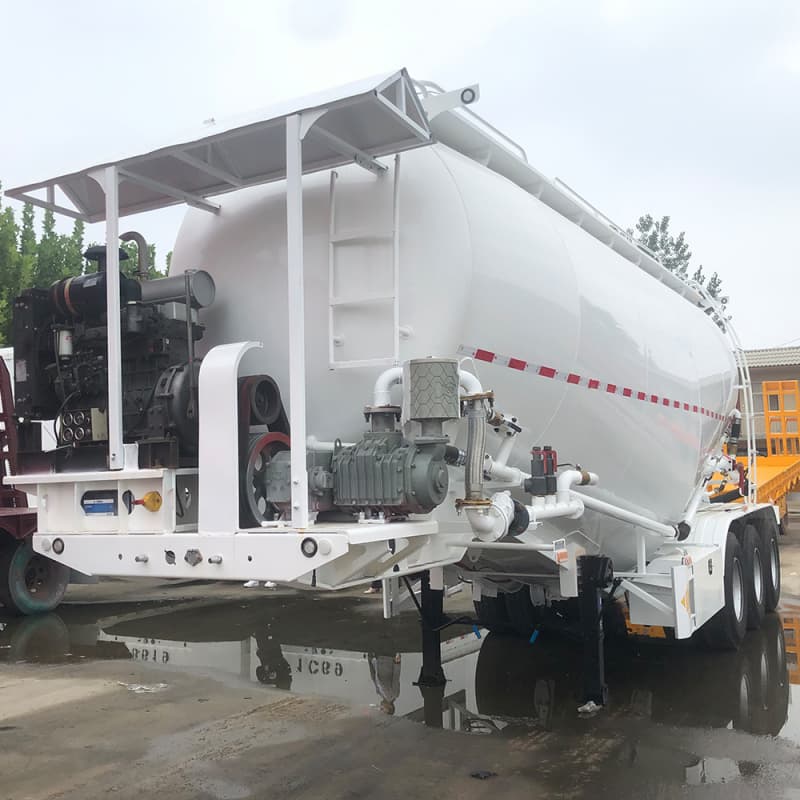
Aluminum Alloy Cement Bulk Tanker Trailer 85m³ 80t 3 Axles GreenHighly recommended high-capacity aluminum alloy bulk cement semi-trailer, featuring excellent load capacity and superior durability for efficient transportation. |
|
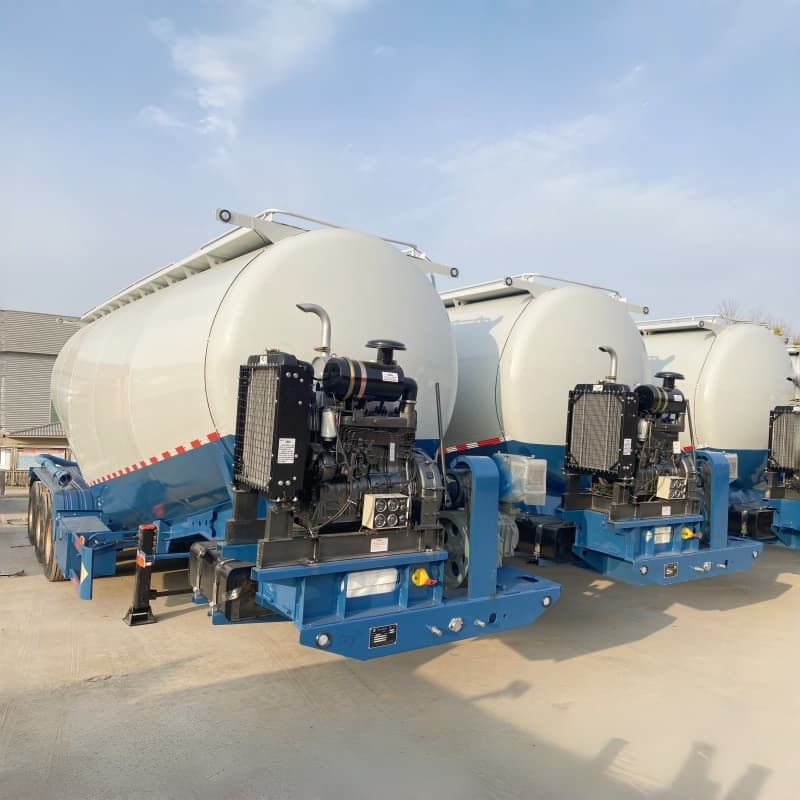
Stainless Steel Cement Bulk Tanker Trailer 3 Axles dual tiresPremium stainless steel construction with dual tires configuration, offering outstanding corrosion resistance and enhanced stability on tough terrains. |
|
Carbon Steel Cement Bulk Tanker Trailer 40t Blue 3 AxlesA cost-effective and heavy-duty carbon steel bulk cement tanker trailer, built for reliable long-haul transportation with a 40-ton capacity. |

|
Aluminum Alloy Cement Bulk Tanker Trailer 3 Axles Single TiresLightweight aluminum alloy tanker equipped with single tires, optimized to reduce dead weight and maximize fuel efficiency without compromising strength. |
Maintenance Schedules for Long-Term Equipment Reliability
To ensure a service life of over a decade, fleet maintenance managers must enforce strict preventive service protocols for both the pressure vessel and the pneumatic systems.
Daily Pre-Trip Inspections
Drivers should check all moisture traps and water drainage valves on the air compressor lines to prevent water from mixing with the cement powder. Inspect the main discharge hose coupling for wear and ensure the manhole seals are completely clear of debris.
Weekly System Checks
Inspect the auxiliary diesel engine's air intake filters. Because these units operate in extremely dusty environments near cement plants, clean or replace filters frequently to avoid premature engine wear. Check the tension on the compressor drive belts.
Monthly and Quarterly Service
Open the tank inspection hatches and examine the fluidized bed canvas material for signs of wear, tearing, or blinding caused by hardened cement crusts. Lubricate all mechanical discharge valves, check pressure gauges for calibration accuracy, and inspect the JOST landing gear and fifth wheel connection plates for structural wear.
Annual Certification
Perform a comprehensive hydro-test or pneumatic pressure safety test on the main vessel structure, holding the tank at 1.5 times its rated working pressure to check for micro-cracks or structural fatigue across the high-strength steel seams.
Operational and Procurement Considerations
Can I couple a new pneumatic cement tanker with any used tractor brand?
Yes, standard premium cement bulk tanker trailers are engineered with universally compatible international coupling standards, utilizing standard 2-inch (50#) or 3.5-inch (90#) JOST kingpins. This ensures seamless structural mechanical connection with a wide variety of heavy-duty commercial vehicles, including popular Chinese brands like Howo, Shacman, Sinotruk, and FAW, as well as European models such as Mercedes-Benz, Volvo, and MAN. It is critical to ensure the used tractor head features a 6x4 axle configuration and sufficient fifth wheel coupling height to maintain an even, level trailer posture.
What are the advantages of pneumatic unloading over mechanical unloading systems?
Pneumatic unloading systems utilize compressed air fluidization to transport material, completely sealing the process. This approach eliminates material loss from spills and prevents environmental dust pollution. Additionally, it allows dry bulk powder to be pumped directly into vertical silos up to 15 meters high, doing away with the need for mechanical bucket elevators or belt conveyors. Mechanical unloading systems, by contrast, expose materials to atmospheric humidity, require more moving parts, and have significantly higher maintenance requirements.
How do I choose the correct tank volume capacity for West African cross-border transit?
When planning cross-border transport infrastructure routes—such as moving goods between coastal ports and landlocked countries like Burkina Faso or Mali—you must balance volume with strict regional axle-load regulations. While a 60m³ or 80m³ tanker is highly efficient for private mining operations or closed industrial sites, a 35m³ or 45m³ 3 axle cement tanker is typically recommended for public highways. This configuration keeps the gross vehicle weight within the legal limits of regional transport corridors while maximizing payload capacity without incurring overload fines.
How does the trailer prevent cement powder from hardening inside the tank during the rainy season?
Moisture prevention relies on two primary defenses: a high-integrity sealing system and an effective air-drying design. The manhole covers utilize heavy-duty, pressure-resistant rubber seals paired with multi-point mechanical clamps to prevent water ingress. Furthermore, the air compressor system is equipped with an integrated moisture separator and filtration unit. This system removes condensation from the compressed air before it enters the fluidization aeration system, ensuring the cement powder remains completely dry during discharge operations.
What is the standard factory-direct manufacturing and shipping lead time for custom configurations?
Standard custom manufacturing lead times at the factory range from 15 to 25 days, depending on specific structural adjustments, axle brands (BPW vs FUWA), and tank material thickness requirements. Ocean transit via regular bulk carrier or Ro-Ro shipping lanes from international manufacturing hubs to major West African ports (such as Abidjan, Tema, or Lomé) typically takes an additional 30 to 45 days. Fleet operators should plan for a total lead time of approximately 60 to 75 days from initial deposit to port delivery.