Transporting heavy machinery across demanding terrains presents unique logistical challenges. In growing infrastructure and mining markets, selecting the correct lowboy configuration impacts operational efficiency, equipment safety, and overall ROI. The removable gooseneck trailer—commonly known as an RGO or detachable lowboy—provides a specialized front-loading solution designed to solve heavy haulage bottlenecks.
What Is a Removable Gooseneck Trailer and How Does It Work?
A Removable Gooseneck Trailer is a specialized heavy-haul lowboy trailer where the front neck assembly detaches entirely from the main trailer deck. Driven by a dedicated hydraulic power pack unit or tractor PTO system, the hydraulic cylinders lower the main deck to the ground. Once disconnected, the tractor drives away with the gooseneck attached, leaving a smooth, uninterrupted ramp at the front of the deck.
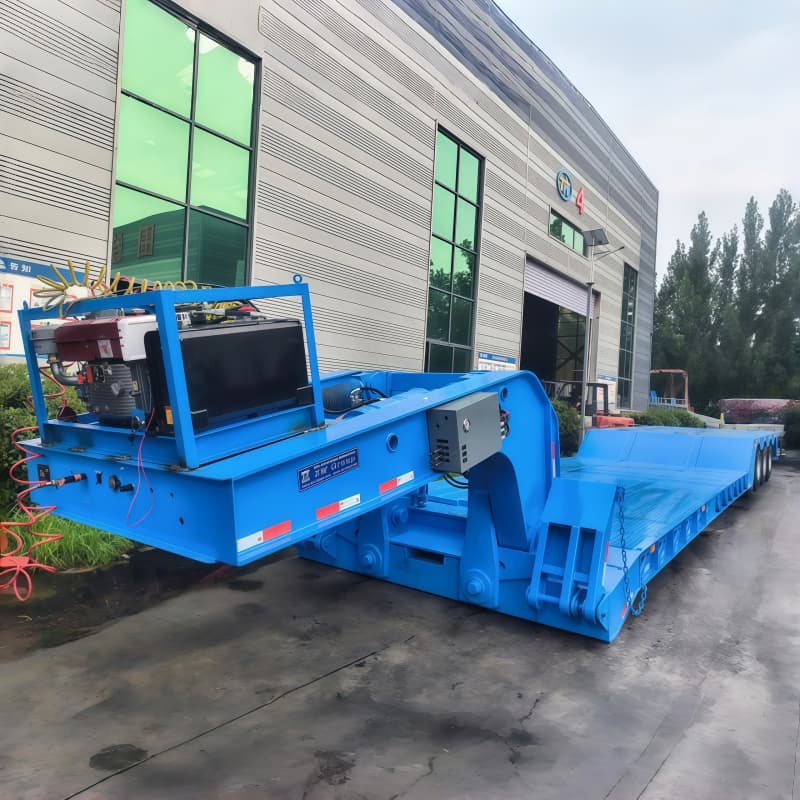 |
Removable Gooseneck Semi Trailer 85t 4 Axles Blue
|
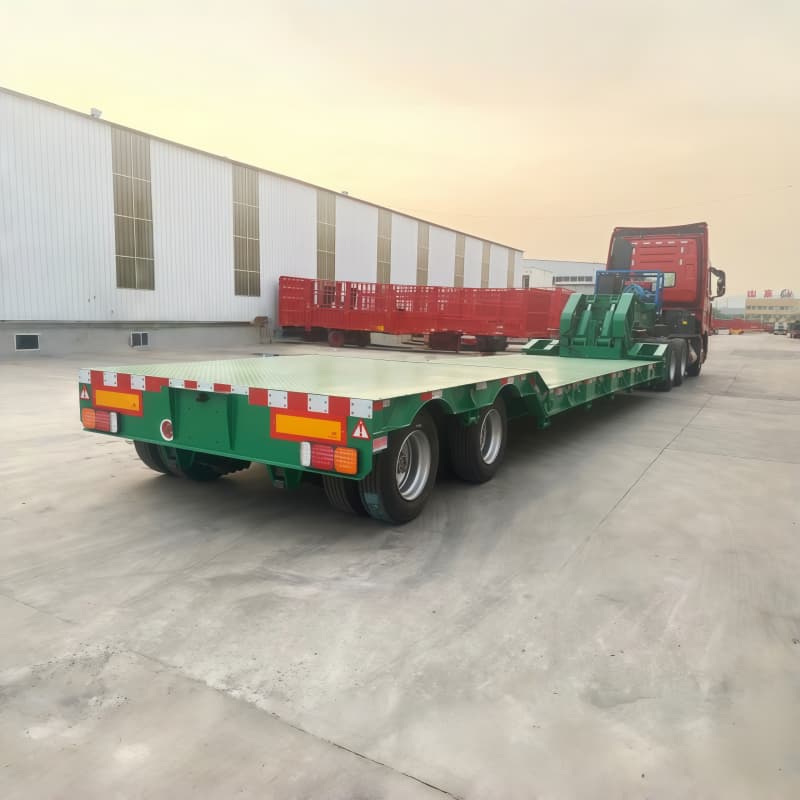 |
Removable Gooseneck Semi Trailer 50t 2 Axles Green
|
 |
Removable Gooseneck Semi Trailer 60t 3 Axles Red
|
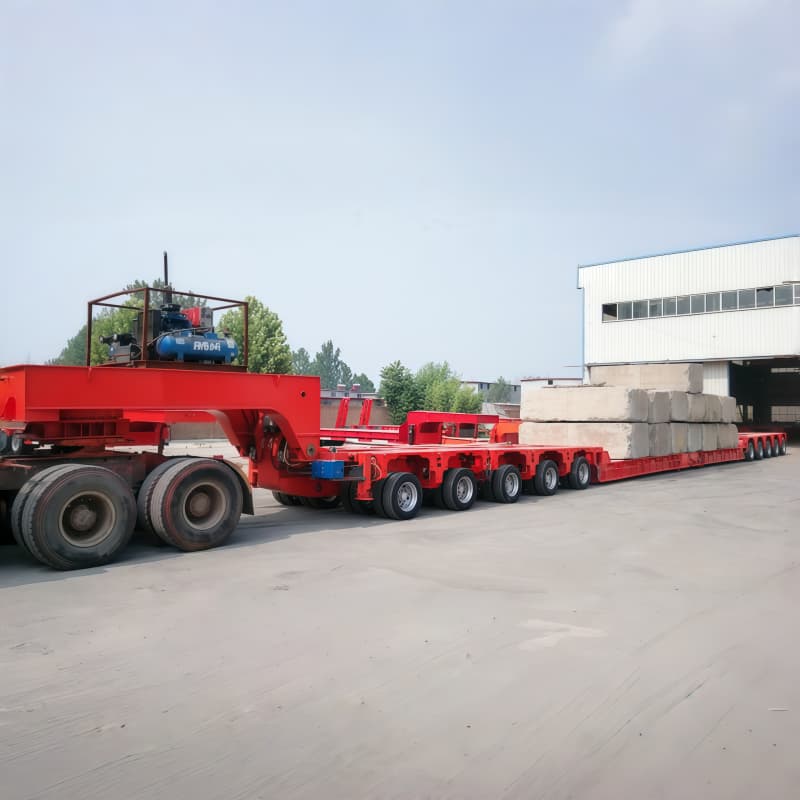 |
Nicolas Modular Removable Gooseneck Hydraulic Semi Trailer 10 Axles
|
- Front-Loading Mechanism: Eliminates the dangerous incline angles associated with rear-loading trailers, allowing low-clearance equipment to drive straight onto the deck.
- Hydraulic Detachment: Heavy-duty hydraulic rams control the connection and ground-level positioning in minutes.
- Multi-Axle Flexibility: Configurations range from 2-axle setups for 40-ton loads up to multi-axle modular units supporting over 100 tons.
- Heavy-Duty Main Beam Construction: Manufactured using high-tensile steel (such as Q345B or T700) to resist structural flexing under concentrated payloads.
Who Needs to Deploy RGO Lowboy Trailers?
Heavy haulage operators, logistics firms, and site managers across critical industrial sectors rely heavily on detachable gooseneck trailers to handle oversized, non-standard, or extremely heavy machinery:
Mining & Quarrying Operators: Essential for transporting heavy tracked excavators, large dozers, and crushing units between operational sites without damaging equipment undercarriages.
Civil Infrastructure Contractors: Used by highway construction firms moving asphalt pavers, road rollers, and heavy motor graders to active job sites.
Energy & Power Project Logistics: Specialized carriers transporting heavy transformers, turbine components, and structural steel structures.
Where Are Detachable Goosenecks Most Effective?
Standard rear-ramp trailers require elevated loading areas or dangerous wooden blocks to load tracked machinery. A removable gooseneck trailer excels in environments where job sites lack specialized loading docks or where ground conditions are rough and unstable. By dropping the deck flat to the terrain, loading operations can occur safely on unpaved site access roads, remote quarry floors, or clearing zones.
Furthermore, the ultra-low deck height clearance provides maximum vertical space, enabling transporters to pass safely under overhead power lines, bridges, and toll gantries without exceeding statutory height limits.
When Is the Right Time to Invest in an RGO Lowboy?
Upgrading to a detachable gooseneck setup becomes necessary under specific operational conditions:
- When moving high-value tracked machinery with ultra-low ground clearance that cannot climb steep rear ramps without damaging chassis or hydraulic components.
- When fleet downtime during loading and unloading operations directly impairs project deadlines.
- When haulage regulations mandate strict axle weight distribution for heavy payloads.
- When single-operator loading safety needs to be prioritized to prevent site accidents.
Why Choose a Removable Gooseneck Over Standard Rear-Loading Lowboys?
The primary advantage lies in operational safety and mechanical protection. Rear-loading trailers require machinery to climb high-angle ramps, shifting the center of gravity dangerously backward. For heavy crawlers or slick rubber-tired equipment, this poses severe rollover risks.
With an RGO trailer, the loading angle is reduced to under 10 degrees. Equipment drives directly onto the deck at ground level, protecting track chains, undercarriage rollers, and hydraulic drives from high-stress forces.
How Do You Select and Operate the Correct Trailer Configuration?
Evaluating technical specifications based on payload requirements ensures long-term reliability and compliance with regional road regulations.
| Technical Specification | Standard 50-Ton Configuration | Heavy-Duty 80-Ton Configuration | 100+ Ton Modular Configuration |
|---|---|---|---|
| Payload Capacity | 50,000 kg | 80,000 kg | 100,000+ kg |
| Axle Count & Type | 3 Axles (FUWA / BPW 13T-16T) | 4 Axles with Steerable Option | Multi-line Axles / Hydraulic Suspension |
| Gooseneck Operation | Hydraulic Detachable / Power Pack | Hydraulic Detachable / PTO Connection | Heavy-Duty Hydraulic Pin Locking System |
| Deck Height (Loaded) | 650 mm – 850 mm | 500 mm – 750 mm | Custom Low-Deck Clearance |
| Main Beam Material | Q345B High-Strength Steel | T700 / HG60 Ultra-High Yield Steel | HG70 / High-Yield Structural Steel |
Standard Operating Procedure for Detaching and Loading:
- Park the tractor and trailer unit on flat, stable ground and set the parking brakes.
- Engage the hydraulic power unit to extend the support cylinder, raising the deck slightly to relieve pressure on the locking pins.
- Retract the main hydraulic locking pins and disconnect the air lines and electrical harness.
- Lower the main deck to the ground using the hydraulic controls, then drive the tractor and detached gooseneck forward away from the deck.
- Drive the heavy machinery straight onto the lowered front deck.
- Reverse the tractor back into position, align the neck with the front crossmember, extend the cylinders, reinsert the locking pins, reattach air lines, and raise the deck to travel height.
Frequently Asked Questions
- How long does it take to detach and reattach the gooseneck?
Under normal operating conditions, an experienced driver can complete the full detachment or connection process in 10 to 15 minutes using the integrated hydraulic controls. - Can a removable gooseneck trailer be powered by the truck engine?
Yes. The hydraulic system can operate via a tractor Power Take-Off (PTO) system or an onboard auxiliary diesel engine (power pack unit) mounted inside the gooseneck frame. - What maintenance is critical for hydraulic detachable lowboys?
Regular inspection of hydraulic seals, checking fluid levels in the power pack, greasing all gooseneck pivot points and pin locks, and inspecting main beam welds for structural stress are vital preventive measures.