Mining contractors, road builders, and bulk material transporters across Ghana face demanding operating conditions—from dense bauxite and manganese mining routes in Western Region to major infrastructure developments connecting Accra, Kumasi, and Tamale. When moving high-density aggregates, sand, and ores, choosing the right side tipper trailer is critical for fleet productivity, driver safety, and rapid discharge cycles.
Operational Overview: A side tipper trailer uses hydraulic ram cylinders to tilt its dump bucket horizontally to the side, unloading bulk cargo efficiently while maintaining a lower center of gravity than traditional end-dump semi-trailers.
Who Relies on Side Tipper Trailers in Ghana?
Heavy-duty side dumping semi-trailers serve diverse industrial sectors that require large-volume bulk transport with minimal downtime:
- Mining Operations: Hauling bauxite, manganese, gold ore, and limestone from interior pit sites to processing facilities and export hubs like Takoradi Port.
- Road Infrastructure Contractors: Distributing gravel, granite, and fill dirt for major highway expansion projects across Ashanti and Greater Accra regions.
- Quarry & Aggregate Suppliers: Transporting crushed stone and sand continuously to urban construction sites.
- Agricultural & Commodity Logistics: Transporting raw agricultural products and bulk minerals across domestic supply corridors.
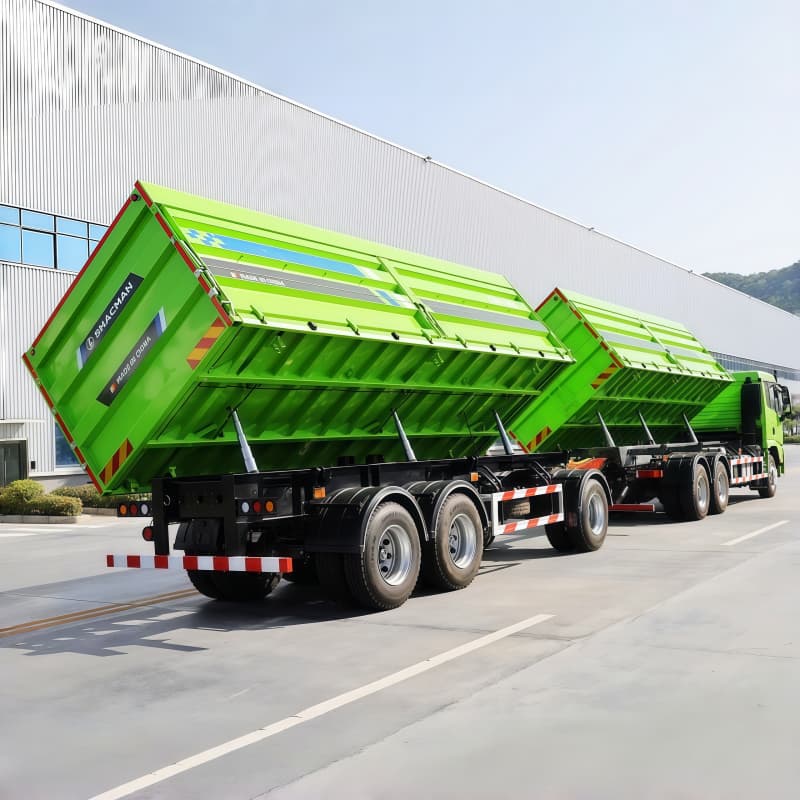 |
Full Drawbar Side Tipper Semi Trailer 60t 3 AxlesEngineered for heavy-duty transport, this 60-ton 3-axle full drawbar side tipper semi-trailer offers robust stability and efficient side-unloading performance for bulk materials. |
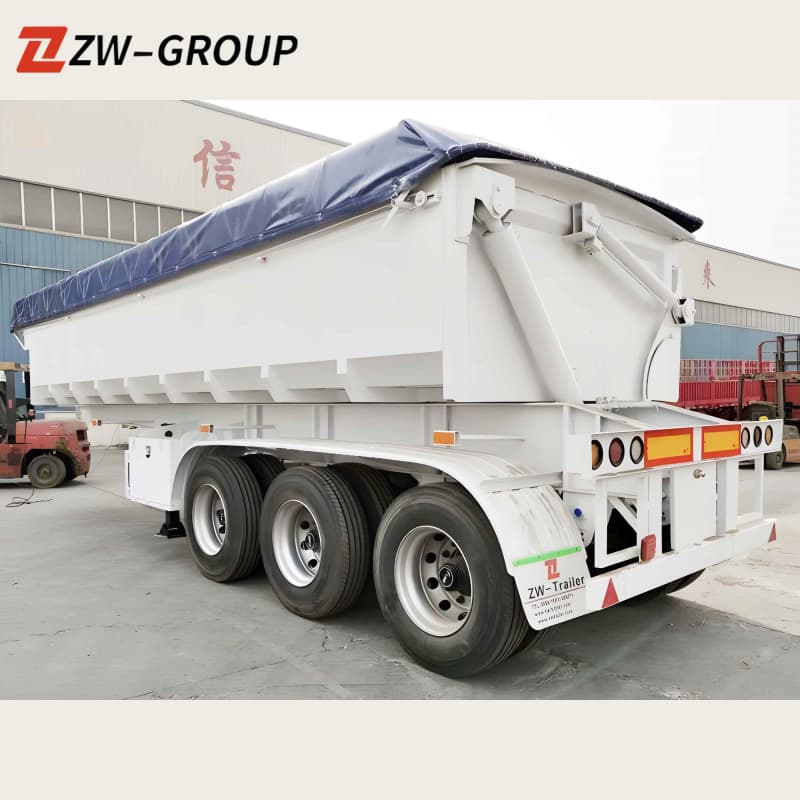 |
Side Tipper Semi Trailer 3 Axles RedA high-durability 3-axle side dumping trailer in striking red finish, designed for quick discharge, reliable load handling, and long-distance transport efficiency. |
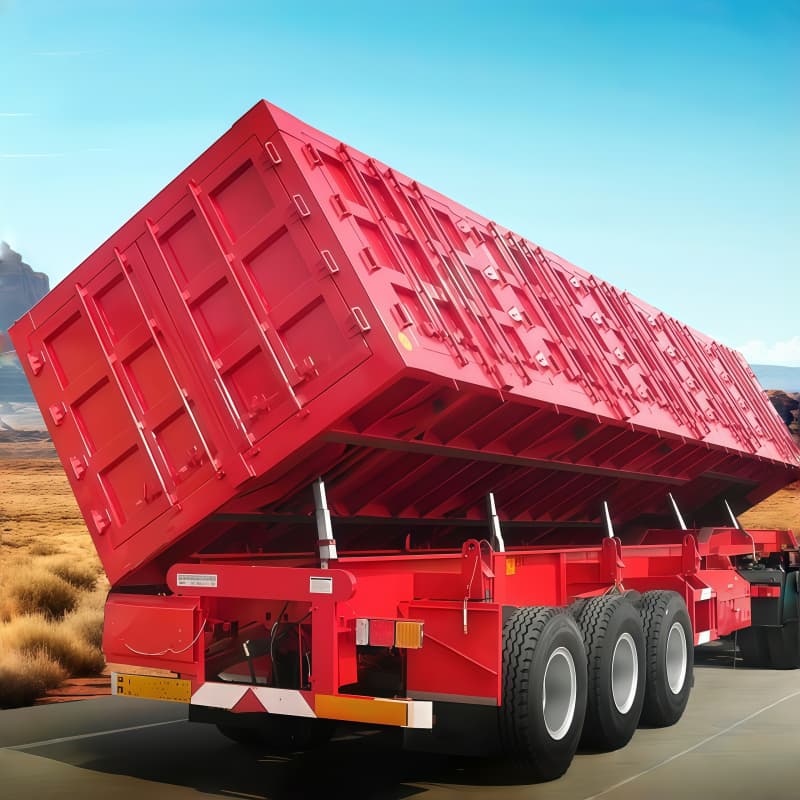 |
Side Tipper Semi Trailer 3 Axles Red (New & Used Options)Versatile 3-axle red side tipper trailer available in new and certified condition, ideal for construction, mining, and bulk cargo logistics. |
What Is a Side Tipper Trailer and How Does Its Hydraulic System Operate?
A side tipper trailer is a specialized heavy-duty transport unit fitted with a longitudinal tipping bucket mounted on a reinforced steel chassis. Powered by a tractor unit's hydraulic system or an auxiliary power pack, hydraulic cylinders extend to tilt the bucket sideways, releasing cargo through automatic latching side doors.
Key Structural Features: High-tensile steel bucket (Q345B/Hardox steel), multi-stage heavy hydraulic cylinders, heavy-duty mechanical or air suspension systems, and automatic door safety locks that trigger during the lift cycle.
When Should You Deploy Side Dump Trailers Over Standard Rear Dumper Trailers?
Upgrading your transport fleet to side dump trailers provides significant operational gains under specific site conditions:
- Low-Overhead Clearance Sites: Discharging cargo under low bridge decks, overhead power cables, or indoor processing plants where rear-dumpers cannot fully elevate.
- Unstable or Soft Mining Terrain: Operating on mud, soft soil, or uneven quarry floors where rear-tipping causes severe rollover hazards.
- Road-Bed Spreading Operations: Unloading material along highway shoulders while moving slowly forward to lay down uniform aggregate beds.
Where Are Side Tipper Trailers Used Across Ghanaian Transport Corridors?
Due to their versatility and rugged construction, side tippers perform reliably in tough environments throughout Ghana:
- Open-Pit Mining Sites: Carrying raw ores over rough haul roads without structural frame flex or weld failure.
- Port Stockyards & Terminals: Unloading bulk minerals direct to stock piles at Takoradi and Tema ports for overseas shipment.
- Remote Construction Corridors: Delivering raw stone materials along unpaved rural arterial roads.
Why Is a Side Tipper Trailer Safer and More Efficient for Mining Logistics?
The engineering advantages of side tippers directly solve many of the safety and efficiency bottlenecks found in bulk transport operations:
| Performance Parameter | Side Tipper Trailer | Rear Tipper Semi-Trailer |
|---|---|---|
| Center of Gravity | Low throughout the entire dumping cycle | Very high when fully raised; high risk of tip-over |
| Unloading Cycle Time | Under 45 seconds | 2 to 4 minutes |
| Vertical Clearance Needed | Minimal clearance required | Requires 8–12 meters of open vertical height |
| Lateral Stability | High stability on sloped/uneven ground | Requires completely flat ground to avoid capsizing |
How to Select and Order the Right Side Tipper Trailer for Your Fleet
Selecting the optimal side tipper requires evaluating key technical specs to match local haulage requirements and road limits:
- Check Axle & Payload Capacity: Match your payload needs (40t to 60t) with 3-axle or multi-axle configurations to stay within highway axle weight regulations.
- Inspect Steel Grade & Plate Thickness: Select high-strength wear plates (such as Hardox or Q345B) for the bucket floor and sides to handle heavy impact from jagged rocks.
- Verify Hydraulic Cylinder Quality: Ensure hydraulic cylinders (like HYVA systems) are rated for continuous heavy-duty cycling without oil leakage.
- Choose Heavy-Duty Suspensions: Opt for reinforced mechanical leaf spring or heavy-duty air suspension paired with premium FUWA or BPW axles for rough road stability.
Fleet Selection Tip: Look for heavy external stiffeners along the lateral bucket walls to prevent bowing when transporting high-density mineral aggregates like iron ore or bauxite.
Frequently Asked Questions About Side Tipper Trailers
Q1: What is the average payload capacity of a 3-axle side tipper trailer?
Standard 3-axle side tippers carry payloads between 40 and 60 metric tons, depending on local axle load regulations and chassis structural reinforcement.
Q2: Can a side tipper dump on both sides?
Yes, dual-side tipping models allow operators to discharge material to either the left or right side by adjusting hydraulic valves and safety locking pins.
Q3: How do side tippers reduce rollover risks on soft ground?
Because the bucket tilts sideways without elevating the chassis high into the air, the trailer maintains a low center of gravity and keeps all tires planted firmly on the ground.