Optimizing Energy Logistics in Southeast Africa
As Malawi accelerates its transition toward cleaner cooking energy and industrial efficiency, the demand for Liquefied Petroleum Gas (LPG) is growing exponentially. To maintain a reliable LPG supply chain, companies require robust equipment capable of cross-border haulage and regional distribution. A high-quality LPG tanker trailer is the backbone of this infrastructure, ensuring secure bulk LPG delivery from regional coastal ports directly into the heart of Malawi.
Who Benefiting from Bulk LPG Tanker Trailers in Malawi
Efficient fuel transport is critical for several key players within the Malawian energy landscape. Implementing a dedicated semi-trailer for bulk transport serves various high-volume operations:
- LPG Importers and Wholesalers: Companies managing large-scale procurement and bulk storage facilities in major economic hubs like Lilongwe and Blantyre.
- LPG Distribution and Retail Companies: Enterprises operating LPG cylinder filling plants that require continuous replenishment to serve residential and commercial markets.
- Industrial and Agricultural Processors: Tobacco curing facilities, tea processing estates, and manufacturing plants utilizing clean energy for thermal applications.
- Commercial and Institutional Facilities: Large-scale operations including major hospitals, hotel chains, and educational institutions that maintain autonomous LPG storage installations.
|
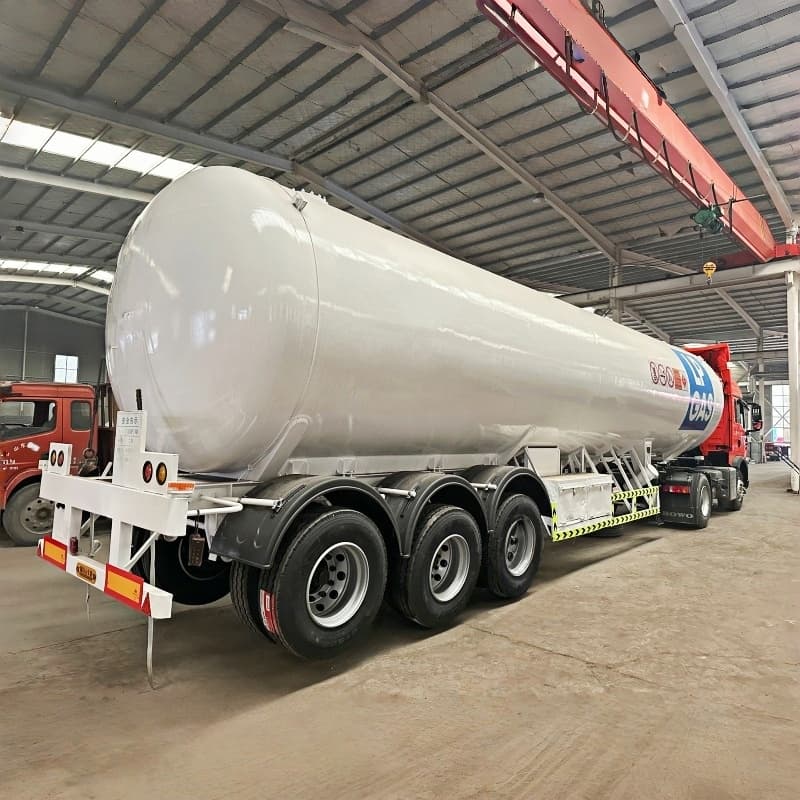
Propylene LPG Tanker Trailer Aluminum Alloy Material 53m³ 30t 3 AxlesHighly recommend this premium aluminum alloy propylene LPG tanker trailer. Featuring a 53m³ high capacity and robust 3 axles design, it delivers outstanding transport efficiency and safety performance for your logistics needs. |
|
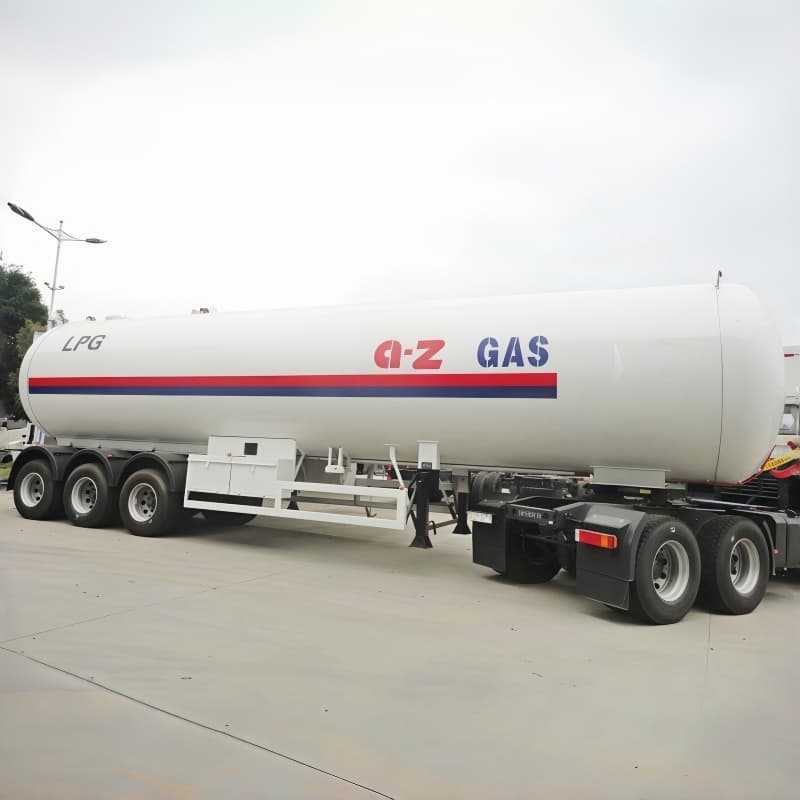
Propane LPG Tanker Trailer Carbon Steel Material 50m³ 29t 3 AxlesWe strongly recommend this high-strength carbon steel propane LPG tanker trailer. Built with a 50m³ volume and a reliable 29t capacity, it offers exceptional durability and cost-effectiveness for heavy-duty gas transportation. |
|
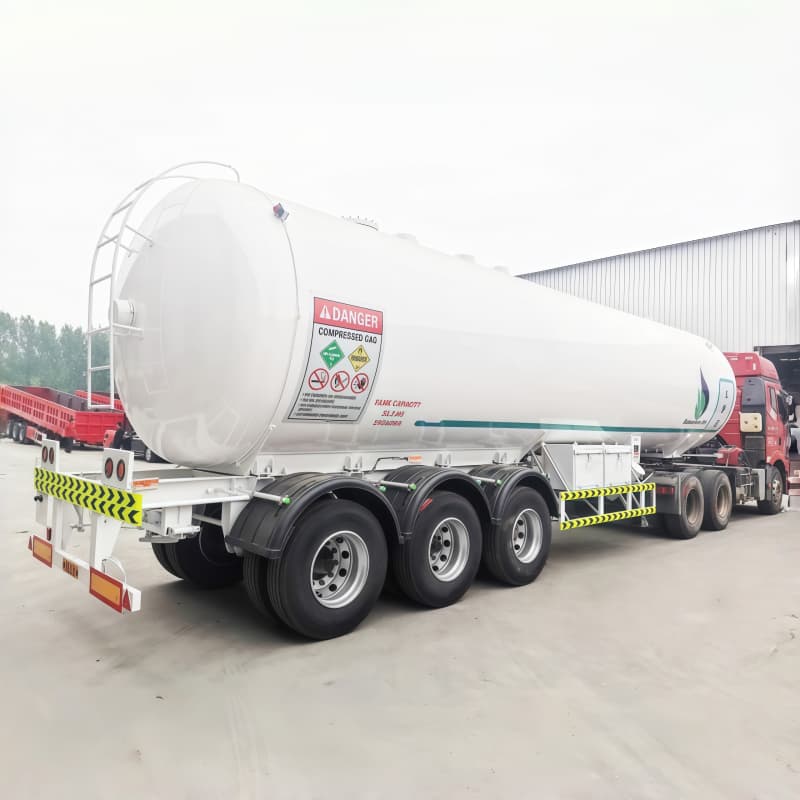
Carbon Steel LPG Tanker Trailer 53m³ 3 Axles WhiteAn excellent choice for your fleet: this 53m³ carbon steel LPG tanker trailer features a clean white finish and 3 durable axles. It provides an optimal balance of large volume capacity and long-term structural reliability. |
|
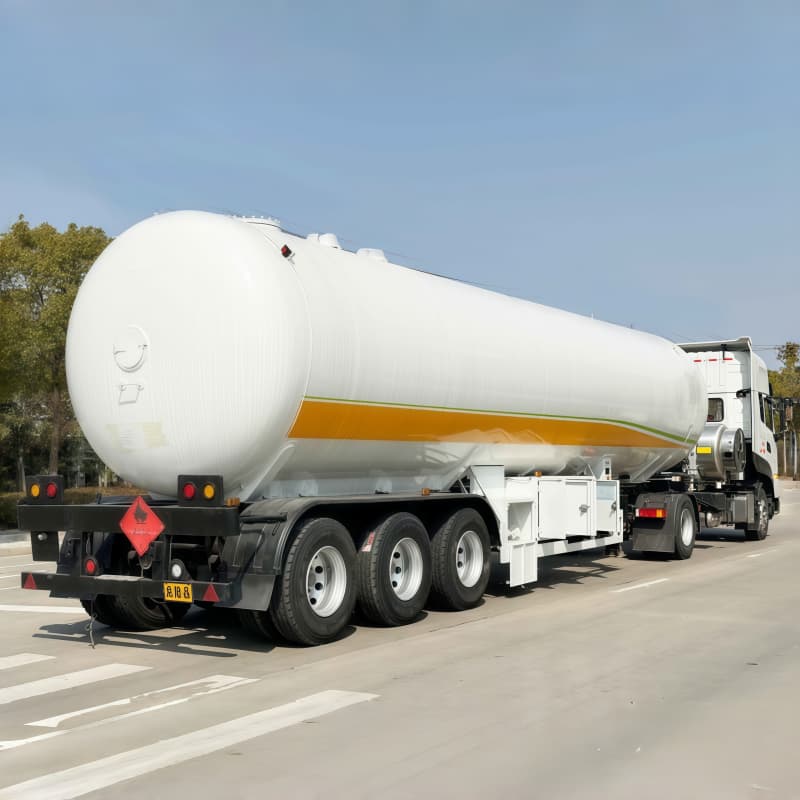
Aluminum Alloy LPG Tanker Trailer 50000L 3 Axles WhiteDiscover this top-tier 50000L aluminum alloy LPG tanker trailer. Designed with 3 axles and a sleek white exterior, its lightweight aluminum alloy structure ensures lower fuel consumption while maximizing your payload capacity. |
What is an LPG Tanker Trailer: Key Technical Specifications & Safety Features
An LPG tanker trailer is a specialized, high-pressure semi-trailer engineered exclusively for the safe containment and overland transport of liquefied gases, such as propane and butane. Given the volatile nature of the cargo, each pressure vessel must be manufactured to rigorous international engineering standards.
Core Structural Components and Specifications
The tank shell is fabricated from high-tensile material Q345R, a specialized steel plate specifically designed for pressure vessels. The structural integrity is supported by a heavy-duty steel chassis, a reinforced landing gear for stable disconnection, and a high-strength kingpin to interface with standard prime movers. The running gear comprises a heavy-duty suspension system (mechanical leaf spring or air suspension) and a responsive pneumatic braking system (often equipped with ABS) to handle challenging terrains.
The operational design encompasses strict parameters: the operating pressure typically spans from 1.61 MPa to 1.77 MPa, with a design temperature range engineered between -40°C and 50°C to withstand extreme African environmental variations.
Critical Safety and Monitoring Systems
Safety is paramount in energy logistics. Top-tier trailers incorporate a comprehensive array of safety instruments:
- Safety Valves: Double high-lift safety valves to relieve excess pressure automatically.
- Emergency Valves: Pneumatic or hydraulic emergency shut-off valves located at the discharge lines, allowing rapid isolation in case of line damage.
- Level Gauges: Integrated rotary level gauges or magnetic float gauges for precise volumetric tracking.
- Overfill Protection: Automatic mechanical or electronic cutoff systems preventing overfilling beyond 85% liquid capacity.
- Manholes: Heavy-duty forged manholes providing secure sealing and reliable internal inspection access.
Technical Specifications Comparison
| Nominal Capacity (L) | Tare Weight (Approx. kg) | Axle Configuration | Recommended Tractor Power | Primary Application Scenario |
|---|---|---|---|---|
| 20,000L | ~8,500 kg | 2 Axles / 3 Axles | 290 hp - 340 hp | Local urban distribution, narrow rural roads, regional filling stations. |
| 30,000L | ~10,200 kg | 3 Axles | 375 hp - 420 hp | Medium-distance cross-district transport, bulk industrial delivery. |
| 40,000L | ~12,800 kg | 3 Axles / 4 Axles | 420 hp - 460 hp | Long-distance cross-border haulage from maritime supply ports. |
Where: Primary Supply Routes and Application Scenarios in Malawi
Malawi is a landlocked nation, meaning its LPG supply chain relies heavily on robust overland fuel transport networks. Tanker trailers navigate extensive cross-border and domestic routes:
- Cross-Border Import Corridors: Bulk LPG delivery primarily originates from coastal terminals, navigating the Beira Corridor from Mozambique or long-haul transit routes from Johannesburg, South Africa.
- Inter-City Primary Supply: High-capacity trailers bridge the distance between entry points and centralized storage hubs in Lilongwe, Blantyre, and Mzuzu.
- Last-Mile Distribution: Smaller capacity tankers navigate localized regional networks to supply individual LPG cylinder filling depots and commercial end-users across remote districts.
When: Operational Lifecycle, Maintenance Schedules, and Inspection Intervals
A premium LPG transport trailer is an asset designed for an operational life cycle of 15 to 20 years, provided systematic preventive maintenance is enforced.
Daily operational protocols require drivers and safety officers to verify the integrity of discharge hoses, check for any visible valve leaks, and confirm the pressure gauge readings. Monthly schedules involve checking the braking system, greasing the landing gear, and verifying the emergency valves functionality.
Statutory testing is vital for compliance with local standards. This mandates a non-destructive structural inspection annually, alongside a mandatory periodic hydrostatic test and pressure testing every 3 to 5 years to certify the integrity of the pressure vessel before renewing operational permits.
Why: Strategic Advantages for Malawian Energy Operations
Investing in custom-built LPG semi-trailers provides clear financial and operational advantages for Malawian logistics companies:
- Reduced Cost-Per-Liter: Transitioning from small-scale containerized delivery to bulk LPG transport drastically optimizes freight economics, driving down unit procurement costs.
- Tailored for African Roads: Heavy-duty mechanical suspensions, reinforced dual-web chassis, and optimized axle spacing ensure long-term structural resilience on both paved highways and unpaved regional routes.
- Guaranteed International Quality: Adherence to global manufacturing protocols, certified by ASME certification or DOT certification, ensures international-grade safety execution.
- Mitigated Product Loss: High-precision sealing and advanced vapour recovery systems minimize boiling-off or escaping emissions during long transits.
How: Operational Workflows and the Procurement Journey
The Loading and Unloading Mechanism
LPG transport relies on closed-loop pressure management. Cargo transfer is managed via a dedicated pumping system or by establishing a pressure differential between the trailer and the storage tank using a vapor compressor. Liquid is transferred through robust, high-pressure discharge hoses hooked up to the trailer's integrated discharge system, which features liquid and vapor phase connections.
Step-by-Step Procurement Process
- Technical Inquiry & Requirements Definition: The buyer defines the required capacity (e.g., 20000L, 30000L, or 40000L) based on prime mover specifications and local axle load regulations.
- Design and Certification Review: Verification of pressure vessel designs against safety codes, ensuring compliance with local standards such as the Malawi Bureau of Standards (MBS) regulations.
- Manufacturing & Testing: The tank undergoes radiography testing, ultrasound inspections, and a rigorous hydrostatic test.
- Logistics and Importation: Shipping arrangements to port destinations like Beira or Dar es Salaam, followed by overland delivery into Malawi.
- Commissioning & Handover: Provision of comprehensive operator training, handover of compliance documentation, and setup of the spare parts supply channel.
Frequently Asked Questions (FAQ)
What import documentation is required to clear an LPG tanker trailer through MRA?
To clear the semi-trailer via the Malawi Revenue Authority (MRA), you will need the original commercial invoice, bill of lading or road consignment note, the manufacturer's Certificate of Conformance (showing ASME certification or equivalent), a valid pressure testing certificate, and an import permit from the Malawi Energy Regulatory Authority (MERA).
How does the trailer design accommodate Malawi's axle load limitations?
Trailers destined for the Malawian market are engineered with optimized axle spacing and heavy-duty suspension systems to fully comply with COMESA and Southern African Development Community (SADC) axle load regulations. This ensures that a 40,000L trailer safely distributes weight across three or four heavy-duty axles without violating gross vehicle weight ratings on major trade routes.
What type of after-sales service and technical support do you provide in Malawi?
We provide extensive after-sales service, including remote engineering consultations and on-site support if necessary. At handover, we provide localized operator training focusing on safe loading, unloading, and emergency protocols to ensure your logistics crew can operate the pressure vessel seamlessly.
How can we ensure a steady spare parts supply for critical safety components?
We maintain a dedicated inventory and reliable spare parts supply for all primary wearing components and safety devices. Critical elements like replacement safety valves, emergency valves, seals, gaskets, pressure gauges, and specific couplers can be dispatched rapidly via air freight to minimize vehicle downtime.