Tanzania has become one of East Africa’s most important automotive transit hubs. Every year, thousands of passenger vehicles, SUVs, pickups, and commercial fleets arrive through the Port of Dar es Salaam before being distributed across Tanzania and neighboring countries such as Zambia, Rwanda, Burundi, and the Democratic Republic of Congo. As vehicle movement volumes continue to increase, logistics companies are investing in modern car carrier trailers that improve transport efficiency, reduce loading risks, and maximize fleet profitability.
A modern car hauler trailer is designed specifically for high-volume commercial vehicle transport across long-distance African routes. Compared with flatbed transport methods, a hydraulic car trailer can safely load multiple vehicles on two levels while maintaining stable weight distribution and faster turnaround times at ports, bonded yards, and inland depots.
Why Car Carrier Trailers Are in High Demand in Tanzania
The demand for multi-car carrier equipment continues to grow because Tanzania serves both domestic and regional vehicle distribution markets. Transport operators moving vehicles from Dar es Salaam to Dodoma, Mwanza, Arusha, Mbeya, and border transit points require trailers capable of handling:
- Long-distance highway transport under high ambient temperatures
- Frequent loading and unloading at ports and inland logistics yards
- Heavy commercial operating cycles with minimal downtime
- Mixed vehicle categories including sedans, SUVs, pickups, and light trucks
- Transit cargo movement toward Zambia, DRC, Rwanda, and Uganda
Many fleet operators in East Africa are replacing conventional flatbed systems with specialized semi-trailer manufacturer solutions that increase carrying capacity while lowering fuel cost per transported vehicle. A properly engineered 6-car carrier or 8-car carrier configuration can significantly improve monthly delivery volume without increasing driver headcount.
Who Should Invest in a Commercial Car Carrier Trailer
Specialized car shipping Tanzania operations require equipment designed for predictable loading geometry, stable vehicle clearance, and reliable hydraulic lifting performance. These trailers are widely used by:
- Automotive logistics companies handling imported vehicle distribution
- Car dealership supply chains delivering new and used vehicles inland
- Clearing and forwarding agents operating near Dar es Salaam port logistics terminals
- Regional transport companies moving auction vehicles into neighboring countries
- Fleet contractors serving mining, infrastructure, and industrial projects
- Vehicle importers seeking higher transport efficiency and lower damage risk
For operators currently relying on multiple single-vehicle deliveries, upgrading to a multi-car carrier often becomes financially practical once monthly transport volume exceeds repetitive short-haul capacity limits. Fuel savings, reduced tire wear, fewer driver allocations, and improved scheduling flexibility contribute directly to stronger operational margins.
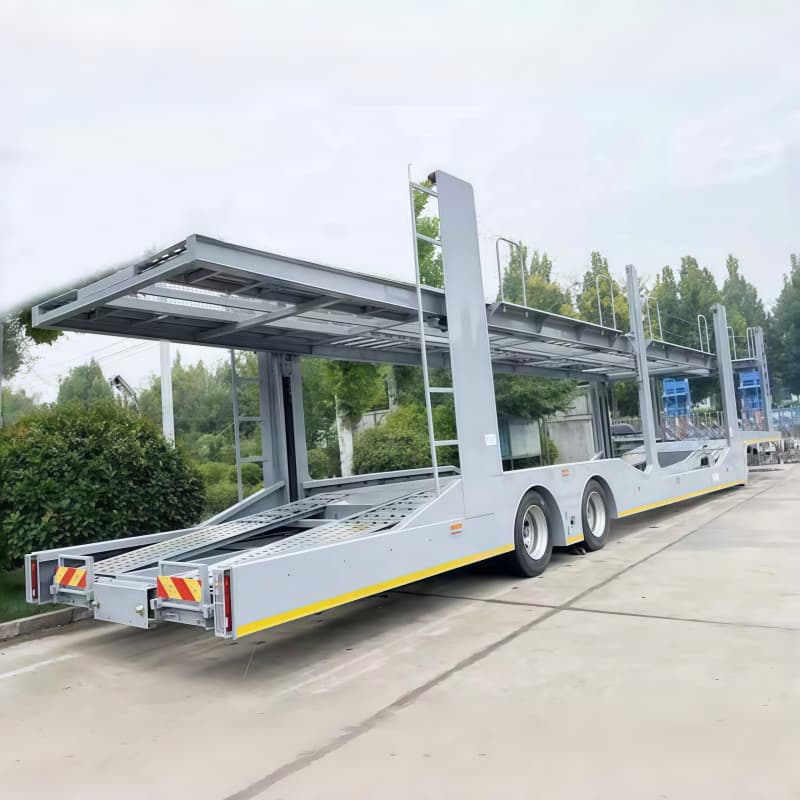 |
Car Carrier Semi Trailer For 8 Cars 2 Axles GreyHighly recommended car carrier semi trailer designed for efficient and safe transport of up to 8 vehicles. Features durable 2-axle construction with a sleek grey finish. |
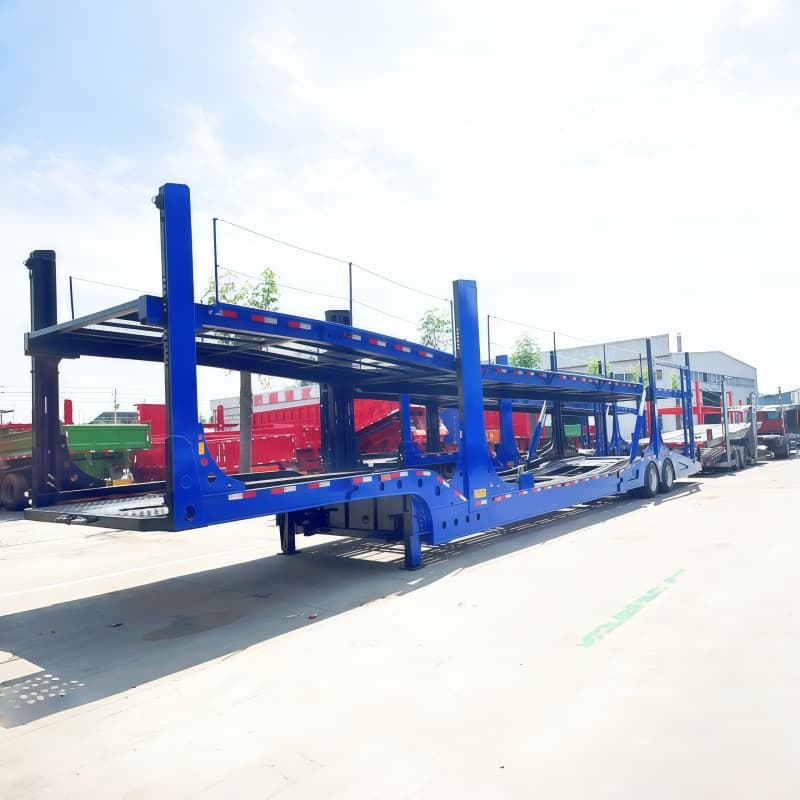 |
Car Carrier Semi Trailer For 6 Cars 2 Axles BlueAn excellent choice for reliable vehicle logistics. This 2-axle blue semi trailer is optimized for securely hauling 6 cars with premium stability and performance. |
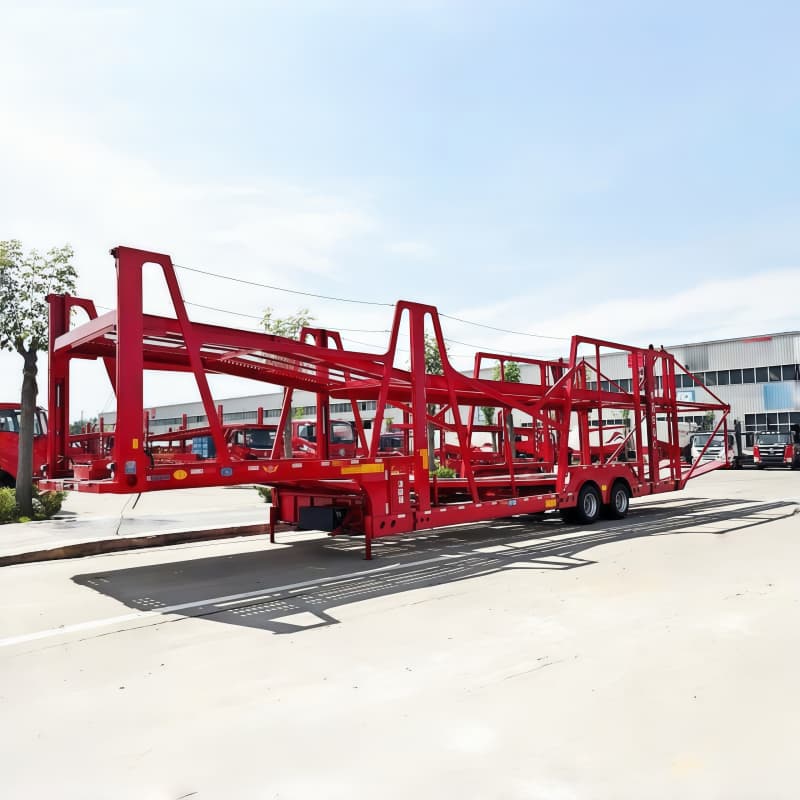 |
Car Carrier Semi Trailer For 8 Cars 2 Axles RedBoost your fleet's capability with this high-capacity red car carrier. Specially built with 2 axles to ensure smooth long-distance delivery for 8 vehicles. |
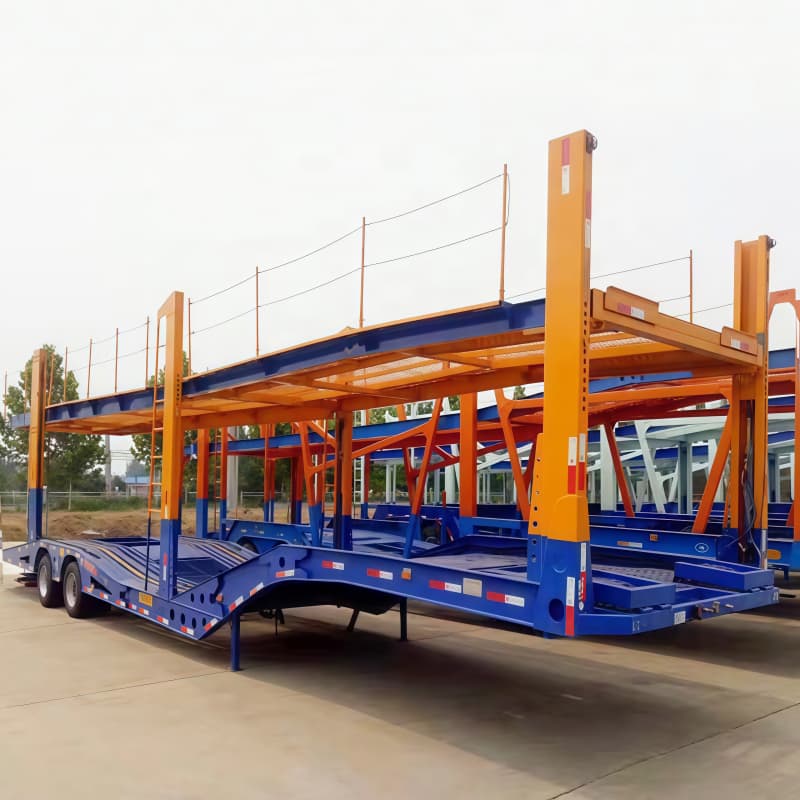 |
Car Carrier Semi Trailer For 10 Cars 2 Axles Select ColorMaximized efficiency for heavy-duty vehicle transport. This 2-axle semi trailer accommodates up to 10 cars, offering customizable color options to match your brand. |
Key Engineering Features That Matter on African Transport Routes
Transport conditions in East Africa are demanding. Road vibration, axle stress, tropical humidity, and extended travel distances place constant pressure on trailer structures. For this reason, experienced buyers prioritize engineering quality rather than focusing only on the initial car transport trailer price.
Modern heavy-duty car carrier trailers are commonly manufactured using Q344/Q355 high-tensile steel. This material offers superior structural strength while reducing unnecessary trailer weight. The optimized chassis design helps maintain high Gross Vehicle Weight Rating (GVWR) performance without excessive fuel consumption.
Key structural areas such as loading ramps, hydraulic support arms, suspension connection points, and upper deck pivot joints are reinforced to withstand continuous loading cycles on rough terrain.
How the Hydraulic Lifting System Works
The hydraulic lifting system is one of the most important components in a professional hydraulic car trailer. The system allows the upper deck to raise and lower smoothly during vehicle loading operations.
Hydraulic cylinders powered by an electric or PTO-driven hydraulic unit adjust the angle and height of the upper platform. This enables operators to optimize vehicle clearance for different cargo dimensions while maintaining balanced axle loading.
In practical operations, the lower deck typically loads first. Once the lower level is secured using heavy-duty tie-down straps and wheel locking systems, the upper deck is hydraulically positioned to maximize vertical space utilization. Anti-skid punching plate surfaces improve tire grip during loading, especially during rainy conditions common in coastal Tanzania.
For long-haul transport from Dar es Salaam toward inland routes, hydraulic synchronization stability is essential. Uneven lifting systems may create deck stress, improper loading angles, or unsafe weight distribution. Premium systems use reinforced hydraulic lines, industrial-grade seals, and pressure-balanced cylinders designed for repetitive commercial operation.
Axles, Brake Systems, and Structural Components
Reliable axle and brake systems are critical for safe vehicle transport across Tanzania’s regional highway network. Most commercial operators prefer FUWA/BPW axles because of their proven durability, spare parts availability, and stable performance under heavy transport conditions.
- FUWA/BPW axles for long-distance durability
- Air brake system with rapid response capability
- 2" or 3.5" Kingpin options for tractor compatibility
- Mechanical or air suspension configurations
- Anti-skid punching plate loading surfaces
- Corrosion-resistant coating systems for coastal environments
- Heavy-duty tie-down straps and wheel securing systems
Fleet operators working on transit corridors between Tanzania and neighboring countries often prefer reinforced suspension systems because road conditions can vary significantly between highways, border crossings, and inland secondary routes.
Commercial Car Carrier Trailer Configuration Comparison
| Parameter | Standard Configuration | Heavy-Duty Upgrade Option |
|---|---|---|
| Vehicle Capacity | 6-car carrier | 8-car carrier |
| Main Beam Material | Q344 high-tensile steel | Q355 reinforced steel structure |
| Axle Brand | Standard commercial axles | FUWA/BPW axles |
| Hydraulic System | Single-pump lifting system | Industrial-grade synchronized hydraulic lifting system |
| Brake Configuration | Dual-line air brake system | ABS-supported heavy-duty air brake system |
| Kingpin Size | 2-inch | 3.5-inch reinforced Kingpin |
| Loading Surface | Standard steel deck | Anti-skid punching plate platform |
| Suspension | Mechanical suspension | Heavy-duty air suspension |
| Corrosion Protection | Standard industrial paint | Multi-layer anti-rust marine coating |
| Operational Environment | Domestic transport | Cross-border long-haul commercial transport |
Factors That Influence Car Transport Trailer Price
The final car transport trailer price depends on several engineering and operational specifications. Buyers evaluating quotations should compare actual structural and mechanical configurations rather than focusing only on the base unit price.
- Number of vehicles carried per trip
- Hydraulic lifting system quality and automation level
- Steel thickness and tensile strength
- Axle brand and suspension configuration
- Brake system specification
- Anti-corrosion treatment process
- Custom dimensions for local road regulations
- Availability of spare parts and after-sales technical support
In East African operations, long-term operating reliability usually provides higher value than choosing the lowest-cost configuration. Reduced downtime, improved payload efficiency, and lower maintenance frequency directly affect fleet profitability over the trailer lifecycle.
Operational Advantages for Dar es Salaam Port Logistics
Port vehicle distribution requires fast turnaround times and safe cargo handling. Specialized commercial car carrier trailers simplify loading procedures and improve yard efficiency during peak import periods.
Benefits for Dar es Salaam port logistics operators include:
- Faster loading and unloading cycles
- Reduced risk of vehicle body damage during transport
- Improved route efficiency for inland distribution
- Higher monthly transport volume per tractor unit
- Lower fuel cost per transported vehicle
- More stable cargo handling on long-distance highways
FAQ About Car Carrier Trailers in Tanzania
How can buyers ensure compliance with Tanzania axle load regulations?
Transport operators should verify axle spacing, suspension design, and Gross Vehicle Weight Rating (GVWR) before purchase. Trailer dimensions and load distribution must comply with Tanzania Revenue Authority (TRA) import regulations and regional transport authority axle load requirements. Working with an experienced semi-trailer manufacturer helps ensure the trailer is configured correctly for East African operating standards.
What is the recommended maintenance cycle for hydraulic systems on long-distance African routes?
Hydraulic systems should undergo inspection every 8,000 to 12,000 kilometers depending on operating intensity and road conditions. Maintenance typically includes hydraulic oil checks, hose inspection, cylinder seal evaluation, pressure testing, and lubrication of pivot joints. Operators running continuous cross-border transport schedules often perform preventive maintenance monthly to avoid unexpected downtime.
How does the anti-rust coating perform in Dar es Salaam’s coastal climate?
High-quality car carrier trailers use multi-layer anti-corrosion coating systems designed for humid and saline coastal environments. Sandblasting treatment combined with epoxy primer and polyurethane top coating helps protect structural steel from oxidation caused by sea air exposure near Dar es Salaam port. Proper washing and periodic surface inspection further extend coating lifespan.
Which axle brands are most suitable for East African transport conditions?
FUWA/BPW axles are widely preferred because they offer stable durability, strong load-bearing performance, and easier spare parts access across African logistics markets. Their reliability becomes especially important on long-distance commercial vehicle transport routes involving rough terrain and heavy operating cycles.
Why is vehicle clearance important on a multi-car carrier?
Correct vehicle clearance prevents contact damage between transported vehicles during highway movement and uneven road conditions. Adjustable hydraulic deck positioning allows operators to safely accommodate different vehicle heights while maintaining legal transport dimensions and stable weight distribution.