Zimbabwe's mining and petroleum sectors are experiencing sustained capital investment, driving unprecedented demand for reliable bulk fuel transport. For fleet managers operating along the Beira corridor or servicing remote extraction sites in the mineral-rich Great Dyke, equipment failure is not an operational inconvenience—it is a direct threat to production continuity. Selecting the correct tri-axle fuel tanker trailer directly determines whether your logistics chain maintains profitability or haemorrhages revenue through downtime and penalties.
1. The Operational Landscape: Who Requires Heavy-Duty Fuel Transport in Zimbabwe
Fuel logistics in Zimbabwe is not a homogenous market. The requirements of a Harare-based commercial distributor differ materially from those of a contractor running diesel to a chrome mine near Shurugwi. Understanding the specific user profiles clarifies why standard equipment often proves inadequate.
- Mining Fleet Operators: These end-users manage the continuous refuelling of massive off-road haul trucks, excavators, and on-site generators. They demand tankers with exceptional payload capacity and structural integrity to withstand unpaved, corrugated mine roads. A stranded fuel bowser halts a multi-million-dollar operation.
- Cross-Border Logistics Companies: Transporters moving refined petroleum from Beira, Mozambique, into Zimbabwe or ferrying cargo along the North-South Corridor require equipment optimised for highway speed, fuel efficiency, and swift ZIMRA customs clearance. These operators value lightweight engineering that maximises legal payload limits across borders.
- Independent Fuel Station Owners & Distributors: Entities managing networks from Mutare to Bulawayo need versatile, multi-compartment tankers capable of delivering both petrol and diesel in a single trip, maintaining product purity while navigating narrow urban forecourts and rural access roads.
The unifying thread across these profiles is the punishing operational environment. Major arterial routes like the Beira corridor transport link are critical yet often congested and subject to abrupt surface degradation. Local infrastructures demand a rugged transport solution where suspension and braking system reliability are non-negotiable safety factors. Investing in a purpose-built tanker is therefore a calculated decision to safeguard fuel supply chains against predictable local stress factors.
|
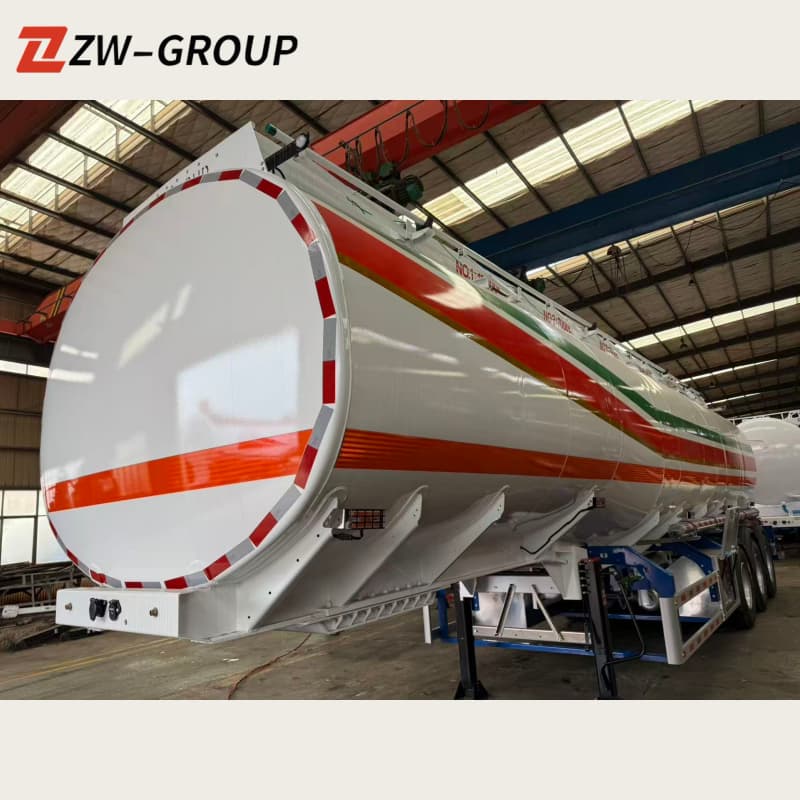
Aluminum Alloy Fuel Tanker Trailer 45000L 3 AxlesHighly recommended high-capacity aluminum alloy fuel tanker trailer. Designed with 3 axles and a 45,000L capacity, it offers excellent fuel efficiency and superior corrosion resistance for long-distance liquid transportation. |

|
Carbon Steel Fuel Tanker Trailer 45m3 3 Axles WhiteA durable and cost-effective heavy-duty transport solution. This 45m³ carbon steel fuel tanker feature a robust structural design, making it ideal for stable and secure petroleum products delivery under diverse road conditions. |

|
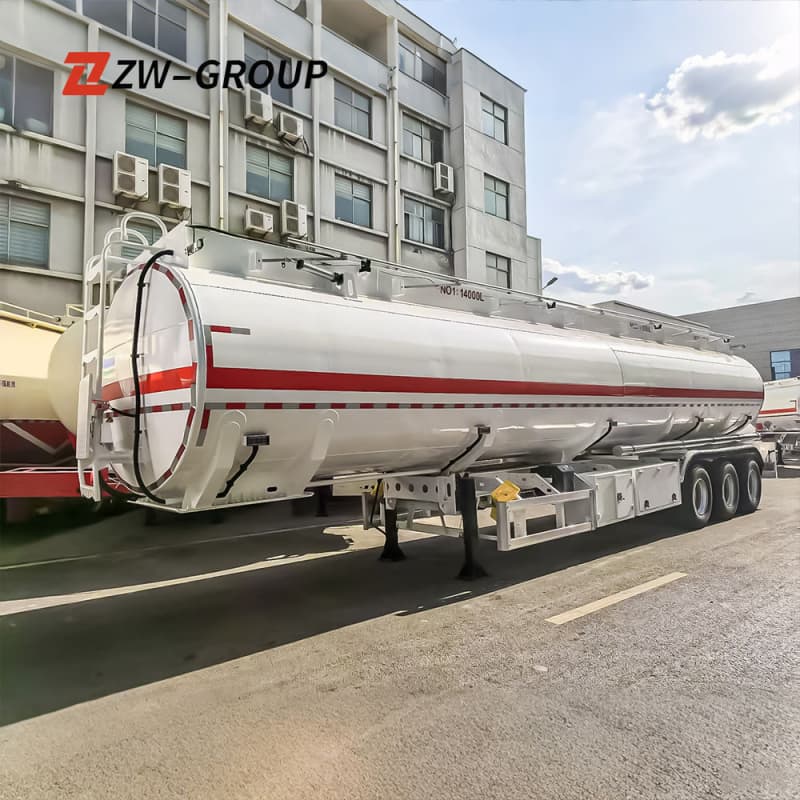
Aluminum Alloy Fuel Tanker Trailer 45000L-50000L 3 Axles GreenPremium flexible capacity tanker built from lightweight yet high-strength aluminum alloy. Featuring a customizable 45,000L to 50,000L volume, it maximizes payload efficiency while maintaining low maintenance costs. |
|
Stainless Steel Fuel Tanker Trailer Load-bearing Tank 3 Axles WhiteTop-tier heavy machinery for specialized liquid logistics. Constructed with premium stainless steel, this load-bearing tanker guarantees ultimate purity for hauled fluids and absolute reliability for challenging operations. |
2. Engineering Integrity: What Defines a Mine-Ready Tri-Axle Fuel Tanker
Procurement managers must look beyond surface-level specifications and evaluate the engineering core of any fuel tank semi trailer for sale. The difference between a commodity trailer and a mining-spec asset lies in its material science, axle configuration, and safety architecture.
Material Selection: Carbon Steel vs. Aluminum Alloy
The choice of tank material dictates longevity and return on investment. For Zimbabwean applications, the decision must balance physical toughness against corrosive resistance and tare weight.
- Carbon Steel Oil Tanker Construction: High-tensile carbon steel offers superior resistance to impact and abrasion. For mining logistics, where flying aggregate and accidental contact with rigid loading equipment are common, a carbon steel oil tanker provides a robust margin of safety. Modern fabrication uses reinforced shell rings and dished heads to eliminate weak points under baffle stress. This material remains the predominant choice for mines where minor dents from site conditions are anticipated.
- Aluminum Alloy Tanker Trailer Design: An aluminum alloy tanker trailer can reduce tare weight by up to 2 tonnes compared to a steel equivalent, allowing a corresponding increase in legal payload capacity. Aluminum naturally resists oxidation, preventing internal contamination of low-sulphur diesel. For long-haul operations between Harare and the Chirundu border post, the weight savings translate directly into additional litres delivered per trip, improving fuel distribution efficiency significantly.
Running Gear and Braking Systems
A tri-axle fuel tanker running at gross weights requires running gear engineered for stability and emergency control. The standard specification for premium tankers serving Zimbabwean routes must include a robust mechanical suspension system, typically a heavy-duty leaf spring arrangement, proven on uneven terrain. This must be matched with a dual-line pneumatic braking system delivering immediate response across all wheels. Crucially, an integrated anti-lock braking system (ABS) prevents wheel lock-up during emergency stops on loose gravel or wet tarmac, preserving directional control. These three systems function as an integrated safety unit essential for protecting the driver, the asset, and the cargo.
3. Lifecycle and Fleet Integration: When to Upgrade Your Transport Assets
An experienced transport director understands that fleet composition is cyclical. Recognising the juncture to introduce new equipment prevents reactive spending. A 45000L tanker trailer provides the volumetric sweet spot for many regional operations, balancing manoeuvrability with capacity.
The optimal moments for acquisition include:
- Ramping Up for Peak Mining Season: Dry months see intensified extraction activity and surging fuel demand. Delivering fuel with an unreliable fleet risks contractual penalties. Integrating additional 3 axles tankers ahead of this surge guarantees fuel supply consistency.
- Phasing Out High-Maintenance Assets: When a legacy fleet exceeds its economic repair threshold, weld cracks in carbon steel tanks and failing running gear signal an immediate need for replacement. New-generation chassis designs with cross-braced construction resist torsional flexing, effectively doubling the operational lifecycle under continuous heavy-load conditions.
- Securing New Depot Contracts: Winning a supply agreement with a major mining house often comes with fleet age and safety specification clauses. Procuring compliant, modern tankers is a prerequisite for accessing these revenue streams.
4. The Value Proposition: Why a Tri-Axle Configuration Reduces Total Cost of Ownership
The insistence on premium engineering is rooted in financial logic rather than mere technical preference. The fuel tanker trailer price in Zimbabwe reflects initial capital outlay, but long-term profitability hinges on total cost of ownership. A tri-axle distribution of weight ensures compliance with road regulations while minimising tyre scrub and rolling resistance.
Internal baffle engineering is a critical but often overlooked element. Well-designed surge plates within a multi-compartment tank prevent destructive liquid movement during braking and cornering. On steep descents approaching low-veld regions, uncontrolled fuel surging generates massive longitudinal forces that overwhelm brakes and destabilise the tractor unit. Effective compartment division transforms dynamic instability into predictable handling, preserving the prime mover's transmission and reducing accident probability.
Further cost compression comes through standardisation. Operating a uniform fleet of tri-axle trailers simplifies spare parts inventories, driver training on pneumatic coupling procedures, and maintenance routines. This standardisation of fuel transport logistics Southern Africa operations ensures that a technician in Masvingo can service a trailer identically to one operating out of Beitbridge.
5. Procurement and Compliance: How to Import a Fuel Tanker Trailer into Zimbabwe
The process of importing a fuel tank semi-trailer involves a clear sequence of logistics coordination and regulatory compliance. Partnering with a manufacturer experienced in Southern African documentation, such as ZW Vehicle, significantly reduces clearance delays. The following procedure outlines the typical import pathway.
Step-by-Step Import Protocol
- Specification and Build Configuration: Finalise the tank material, compartment layout, and axle rating with the manufacturer to match the intended route, whether the Beira corridor transport network or internal mining roads.
- Port of Entry Processing: Bulk tanker units are commonly shipped via sea freight to the Port of Durban (South Africa) or the Port of Beira (Mozambique). Beira offers a shorter inland transit distance to Mutare and Harare, often streamlining the subsequent road convoy segment.
- Over-Border Transit to Zimbabwe: The trailer is transported in-bond from the port to a designated Zimbabwean border post. The Chirundu border post serves northbound traffic effectively, while Beitbridge remains the primary node for traffic from Durban. Correct pre-clearance documentation prevents costly border demurrage.
- ZIMRA Customs Clearance: Importers must lodge a bill of entry through a registered clearing agent. Documentation includes the commercial invoice, bill of lading, and roadworthy certificates. Compliance with ZIMRA import regulations for trailers requires strict valuation accuracy and the physical verification of chassis and tank numbers.
- Final Delivery and Registration: Upon customs release, the unit undergoes inspection by the Vehicle Inspection Department (VID) before registration and deployment into fleet service.
| Tanker Material | Loading Capacity | Axle Configuration | Recommended Application | Availability |
|---|---|---|---|---|
| Carbon Steel (High Tensile) | 40,000L - 50,000L | 3 Axles (Heavy Duty) | Mining fuel delivery, rough terrain, on-site refuelling | Check Inventory |
| Aluminum Alloy (Lightweight) | 45,000L - 50,000L | 3 Axles (Standard) | Cross-border highway transport, Beira to Harare routes | Check Inventory |
| Carbon Steel (High Tensile) | 50,000L - 60,000L | 4 Axles (Heavy Duty) | Bulk long-haul, high-gross-weight permit operations | Check Inventory |
Frequently Asked Questions
What is the standard payload capacity for fuel tankers operating in Southern Africa?
Standard designs for a 45000L tanker trailer in the region typically achieve a payload capacity between 36,000 and 38,000 litres of diesel, accounting for the product's specific density and the trailer's tare weight. A lightweight aluminum alloy tanker trailer can push the legal payload closer to the maximum permissible gross vehicle mass on the Beira corridor transport route.
Which material is better for Zimbabwean roads: Carbon Steel or Aluminum Alloy?
It depends on the primary operating environment. Carbon steel oil tanker construction offers superior resistance to physical abuse from rock strikes and is recommended for mining logistics on unsealed surfaces. Aluminum alloy tanker trailer designs are better suited to highway fuel distribution where tare weight savings translate into revenue, and the lack of ferrous material eliminates internal rust contamination risk.
How do ZIMRA import regulations affect the clearance of semi-trailers at Beitbridge?
ZIMRA import regulations for trailers require strict valuation and classification under the correct tariff heading. At Beitbridge, clearing agents must submit the bill of entry accompanied by the original commercial invoice and transport documentation. Physical chassis number verification occurs during the border inspection. Ensuring pre-arrival processing of the Customs Declaration minimises truck waiting time at the Chirundu border post or Beitbridge.
What safety features are mandatory for cross-border petroleum transport?
Essential safety equipment includes a fully integrated anti-lock braking system (ABS), an emergency shut-off valve for bottom loading, rollover protection hoops, and an advanced pneumatic braking system compatible with the tractor unit. Additionally, an earthing reel, fire extinguishers, and placarding per SADC regulations are mandatory to maintain fuel transport logistics Southern Africa compliance.