What Is a Lowbed Semi Trailer? Key Features
A lowbed semi trailer (also called low loader or low bed trailer) features a gooseneck design that lowers the deck height significantly – as low as 600mm from the ground. This allows transporting tall, heavy machinery while keeping overall vehicle height within Nigeria’s legal limit of 4.2m.
- Deck height – 0.6m to 1.0m depending on gooseneck type
- Load capacity – 20 tons to 150 tons (common models: 40‑ton, 60‑ton, 80‑ton)
- Axle configurations – 2‑axle, 3‑axle (most popular in Nigeria), 4‑axle, 5‑axle modular
- Gooseneck types – fixed, detachable, hydraulic removable (HRG)
- Suspension – mechanical (spring) or air suspension (recommended for rough roads)
- Brake system – ABS available for better control on wet pavement
Difference from standard flatbed: A flatbed’s deck height is ~1.2‑1.4m, which would cause a 4m‑tall excavator to exceed the legal height limit. A lowbed semi trailer solves this problem.
When to Use and Purchase a Lowbed Semi Trailer
In Nigeria, heavy haulage peaks during the dry season (November to March) when roads are firm and passable. Purchase timing should allow 45–60 days for manufacturing, shipping from China/Europe, and customs clearance at Apapa or Tin Can Island Port. A well‑maintained lowbed trailer has a typical service life of 10–15 years.
Where Lowbed Semi Trailers Are Used Across Nigeria
- Construction sites – Moving excavators, bulldozers, wheel loaders on Lagos‑Ibadan road, Abuja ring roads.
- Energy sector – Transporting transformers, generators, drilling rigs to rural substations.
- Ports – Clearing new machinery from Apapa, Tin Can Island, Onne ports to inland workshops.
- Mining zones – Hauling equipment in Jos (tin mining), Zamfara (gold), Ebonyi (lead/zinc).
- Precast concrete yards – Delivering bridge beams, concrete pipes for infrastructure projects.
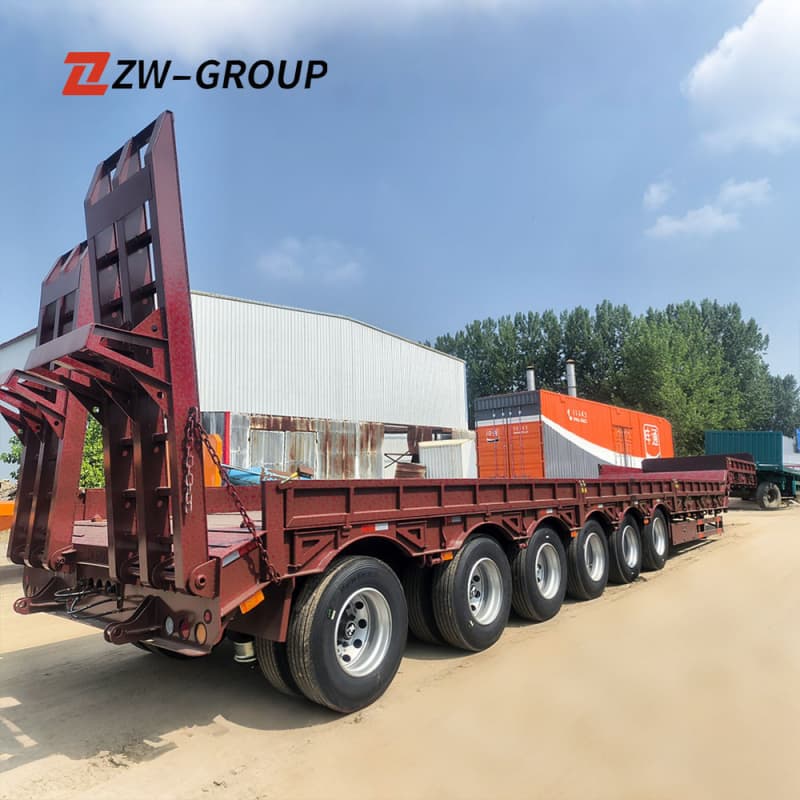 |
Lowbed Semi Trailer 120t 6 Axles Brown-red- Pre-purchase checklist heavy trailers
Highly recommended for heavy-duty transportation. Reliable quality and excellent performance. |
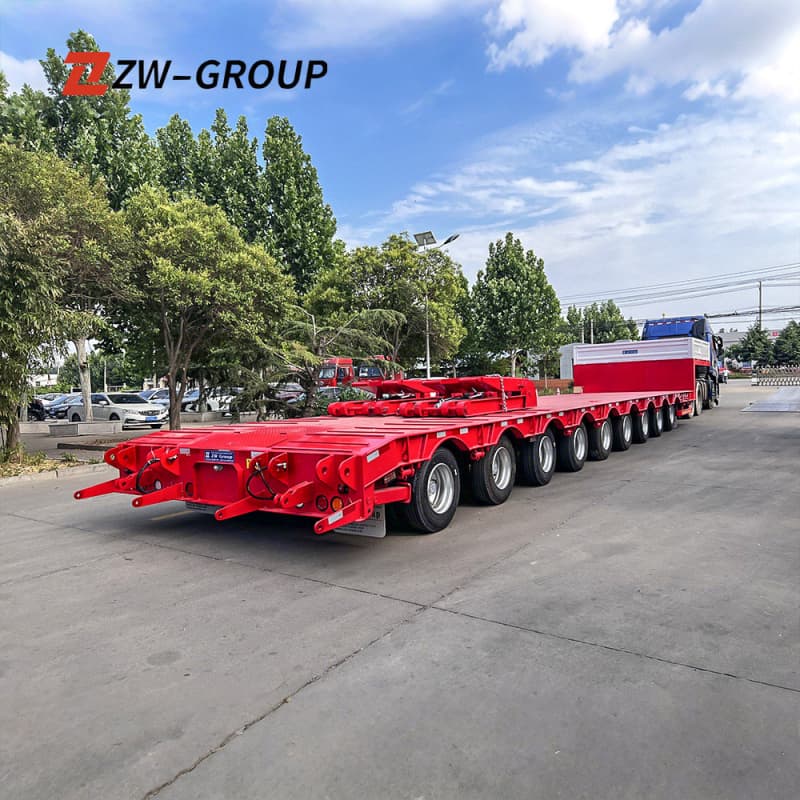 |
Lowbed Semi Trailer 180t 9 Axles Red- Permits for oversize loads
Professional solution for oversize loads with multi-axle support for maximum stability. |
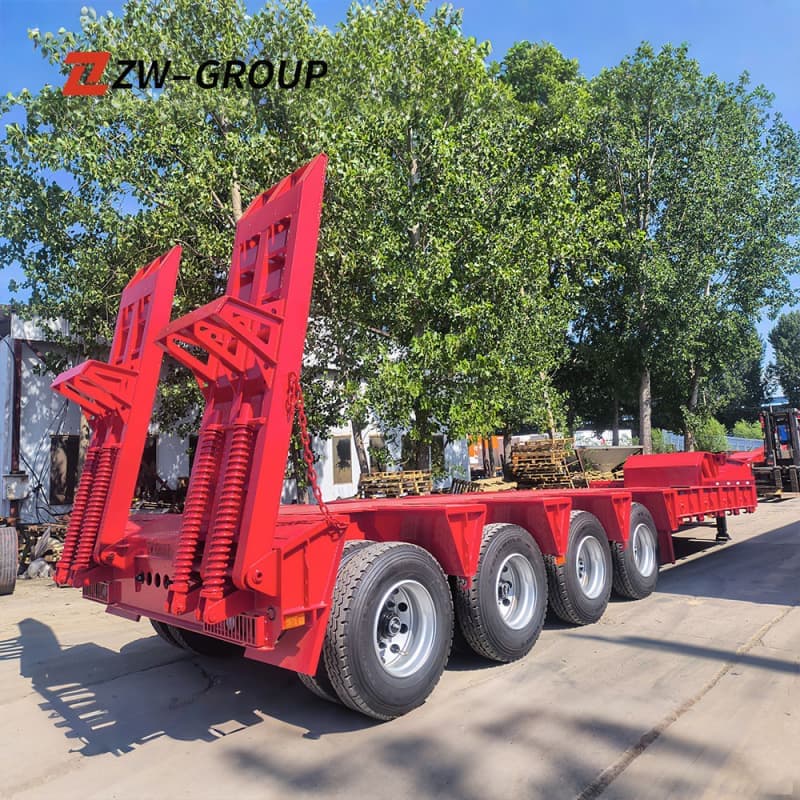 |
Lowbed Semi Trailer 80t 4 Axles Red- Buy Lowboy Trailer
The best choice for mid-range heavy equipment hauling. Durable and cost-effective. |
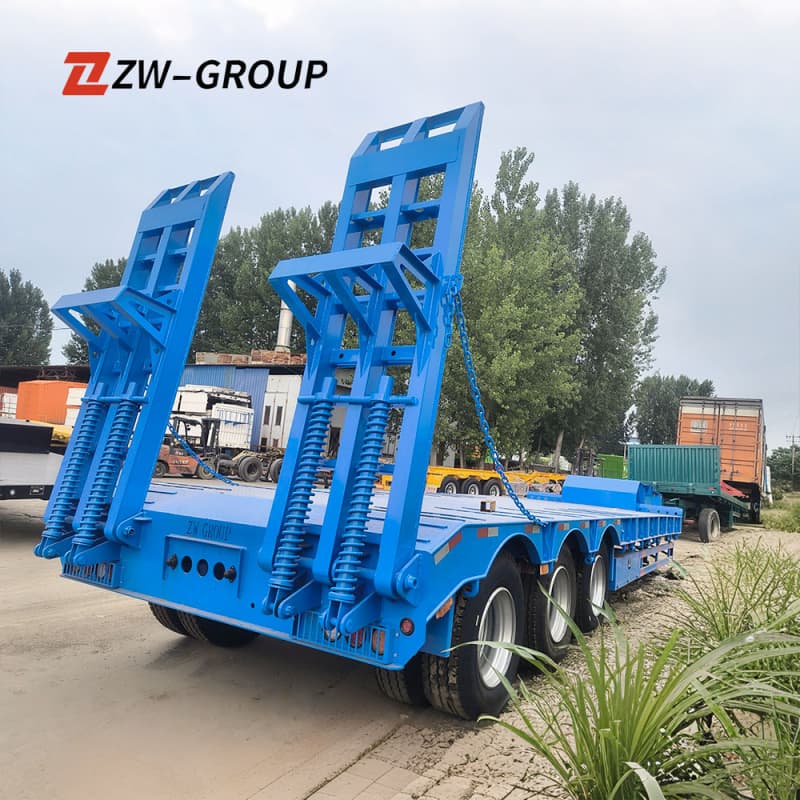 |
Lowbed Semi Trailer 60t 3 Axles Blue- Low loader trailer price
Efficient and flexible low loader trailer. Competitive price with premium building quality. |
Why Nigerian Buyers Choose Lowbed Semi Trailers
- Legal compliance – Keeps total vehicle height under Nigeria’s 4.2m limit when carrying tall machinery.
- Safety on Nigerian roads – Lower center of gravity reduces rollover risk on uneven pavement and potholes.
- Efficiency – Move a 40‑ton excavator without disassembly, saving labour and time.
- Durability – Heavy‑duty suspension and reinforced frame handle laterite surfaces, potholes.
- High resale value – Used lowbed semi trailers retain strong value in Nigeria’s secondary market.
How Lowbed Semi Trailers Work and How to Buy in Nigeria
Loading & unloading principle: For a detachable gooseneck, the front neck is removed to form a ramp – machinery drives on/off. Hydraulic removable goosenecks use cylinders to lower the deck to ground level. Fixed gooseneck models require a forklift or crane for loading.
7‑Step Purchase Process for Nigerian Importers
- Step 1 – Determine required capacity: Max machine weight + 15% safety margin. Example: a 35‑ton excavator → 40‑ton lowbed trailer.
- Step 2 – Choose gooseneck type: Fixed (budget), detachable (drive‑on loading), or hydraulic (daily heavy use).
- Step 3 – Specify axle/brake configuration: 3‑axle with ABS is recommended for Nigerian roads.
- Step 4 – Request proforma invoice: Insist on CFR Apapa or CIF Lagos terms to avoid hidden port charges.
- Step 5 – Arrange shipment & documentation: RORO or flat rack container. Obtain Form M, process SONCAP (Standards Organisation of Nigeria) certificate.
- Step 6 – Clear at port: Use a licensed customs agent. Import duty ranges 15‑35% depending on HS code (typically 25% for lowbed trailers).
- Step 7 – After‑sales support: Ask supplier if they have a service partner in Nigeria for spare parts (brake pads, axle seals, lighting harness).
Comparison of Lowbed Semi Trailer Configurations for Nigerian Applications
| Configuration | Fixed Gooseneck | Detachable Gooseneck | Hydraulic Removable Gooseneck (HRG) |
|---|---|---|---|
| Loading height | 0.9m – 1.0m | 0.6m – 0.8m | 0.6m – 0.7m |
| Loading method | Forklift or crane | Drive‑on via ramp (gooseneck removed) | Hydraulic lowering to ground level |
| Price range (USD) | $8,000 – $12,000 | $12,000 – $18,000 | $20,000 – $30,000 |
| Recommended for | Budget‑conscious, occasional use | Regular heavy machinery moves | Daily loading/unloading of tall equipment |
| Popular in Nigeria | Ogun, Ibadan (cost‑sensitive buyers) | Lagos, Abuja, Port Harcourt | Oil & gas projects, mining operations |
Frequently Asked Questions (FAQ)
1. What is the maximum load capacity of a lowbed semi trailer for Nigerian roads?
Single lowbed trailers typically range from 20 to 80 tons. For Nigerian roads, 40‑ton and 60‑ton models are most common. Modular lowbed combinations (with jeep dolly or booster axles) can reach 150 tons, but require route surveys due to bridge weight limits.
2. Do I need a special driver’s license to operate a lowbed trailer in Nigeria?
Yes. A Class H or Class G driver’s license (heavy goods vehicle) is required. The Federal Road Safety Corps (FRSC) may also require an escort vehicle for loads exceeding 50 tons or 4m width.
3. What is the typical delivery time from China/Europe to Apapa port?
Manufacturing takes 20‑35 days. Sea freight from China to Apapa is 30‑40 days. Including customs clearance, total lead time is 60‑80 days. Express RORO shipments can reduce this to 50‑60 days.
4. How do I choose between detachable gooseneck and hydraulic removable gooseneck?
Choose detachable gooseneck if you move 2‑3 different machines per week and have a moderate budget. Choose HRG if you load/unload daily (e.g., a rental company) – hydraulic operation saves labour and reduces accident risk. For occasional use (monthly), a fixed gooseneck with crane loading is most cost‑effective.
5. Can the trailer handle Nigerian roads during rainy season?
Yes, with proper specifications: air suspension reduces shock; ABS brakes prevent wheel lock on wet pavement. However, avoid unpaved roads after heavy rain. Ask your supplier for high‑ground‑clearance axles (not low‑bed “city” versions).
6. What spare parts should I keep in stock for a lowbed trailer in Nigeria?
Minimum stock: 2 sets of brake shoes, 4 wheel seal kits, 10 LED clearance lights, 1 landing gear handle assembly, 2 air bag suspension units (if equipped). Many Nigerian owners also keep a spare wheel hub and tire (12.00R20 or 315/80R22.5).
7. Are used lowbed trailers available in Nigeria, and what should I check before buying?
Yes, used units are often available at Apapa port auctions or from construction companies. Before buying: inspect deck for cracks or weld repairs, check axle alignment, test all air brakes, verify the kingpin is not worn past legal limit (19mm wear allowance). Request service records and avoid trailers that have carried overloaded containers.
Actionable Tips Before You Order
- Ask your supplier: “What is the brand of axles and suspension?” – German BPW or Chinese FUWA are reliable.
- Confirm tire ply rating – at least 16‑ply (load index 154) for Nigerian roads.
- Request undercoating for corrosion protection (salt air at Apapa port).
- Get a sample commercial invoice to check HS code (usually 8716.39) before paying duty.
- Negotiate a spare parts kit included in the price – many Chinese manufacturers offer this for free.